Apiary
A Sudden Start
We have always been interested in beekeeping at More Forest Farm, but it is hobby requires significant time, material investment, and lots of physical effort. We did our best to prepare ourselves for this challenge through reading books, watching lots of online videos, and taking a local class. We highly recommend anyone interested in this hobby find a local club and see if your county extension office offers a beekeeping class.
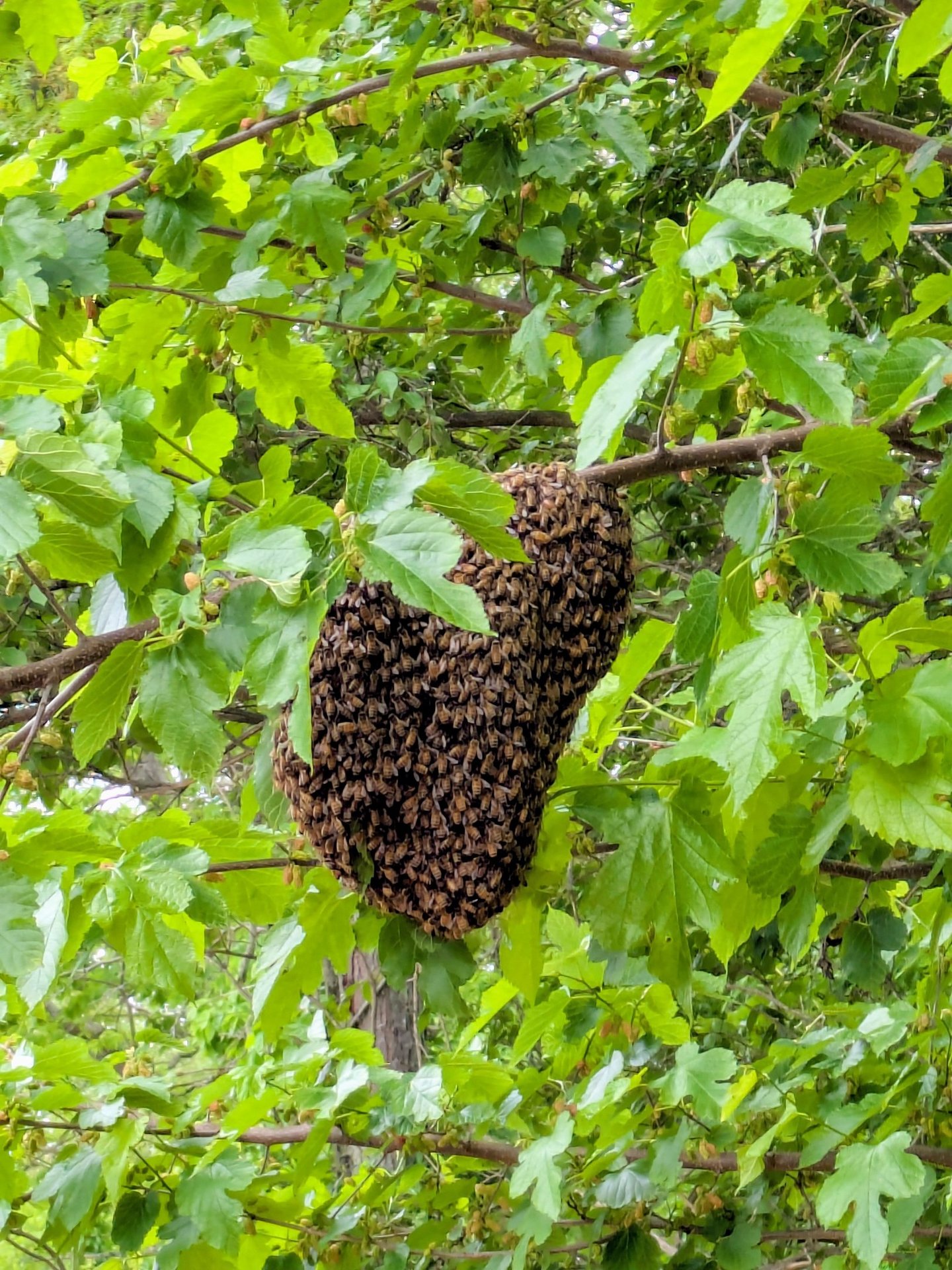
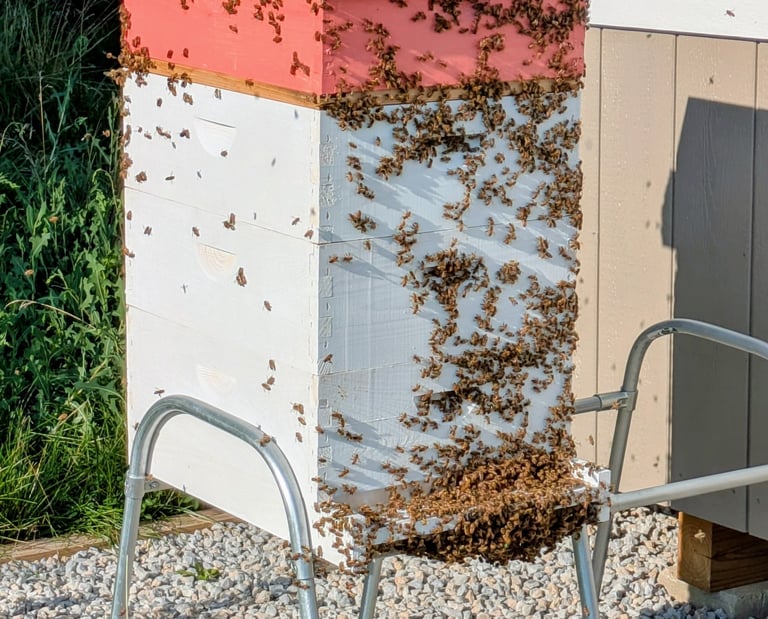
One day, while walking though a back field, we stumbled upon the swarm you see here. They were looking for a home and we were happy to have them join us. It was a good thing that we were prepared! Our two other hive packages arrived just days later and with that our apiary was buzzing with excitement.
Keeping Things Manageable
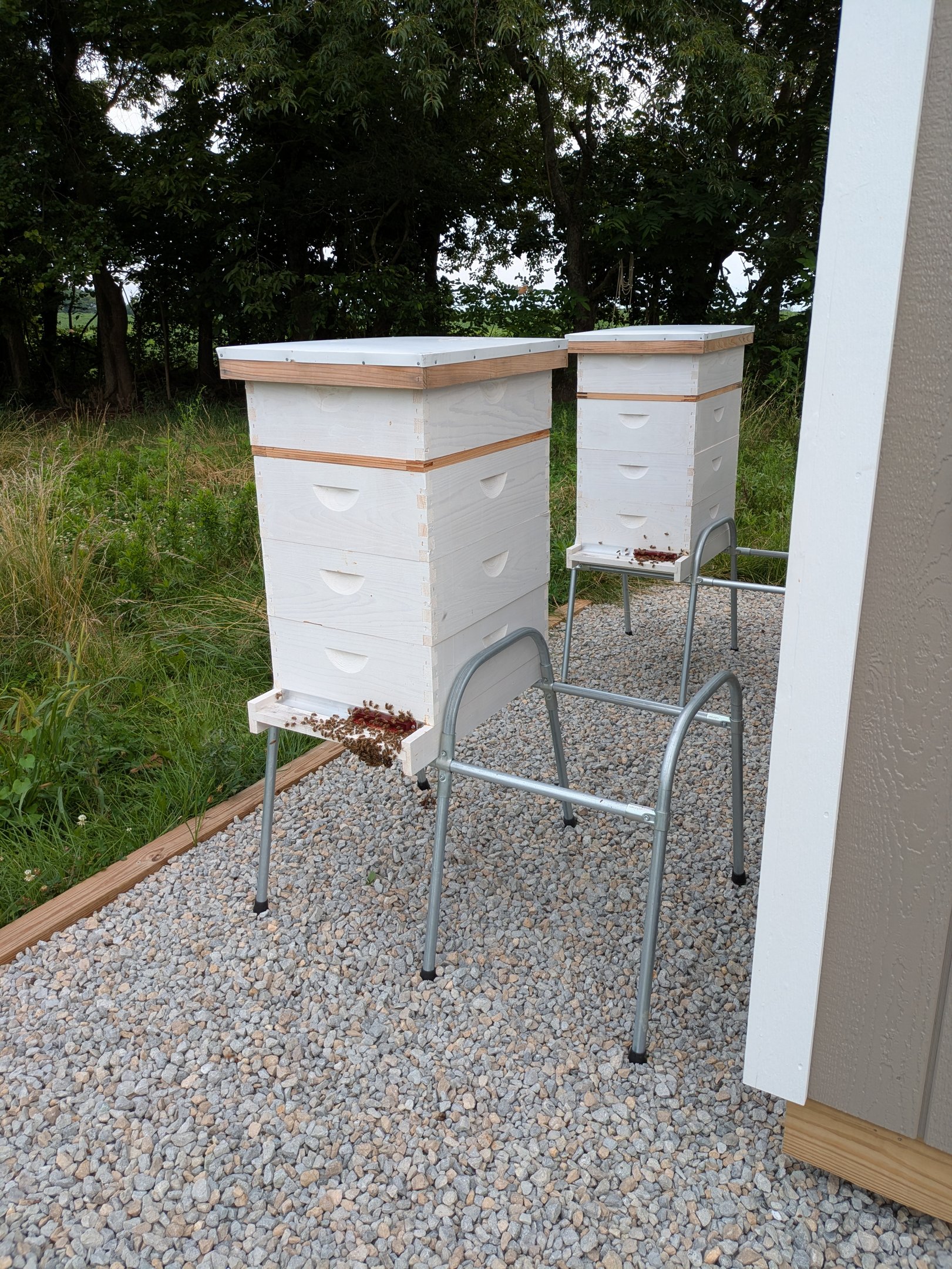
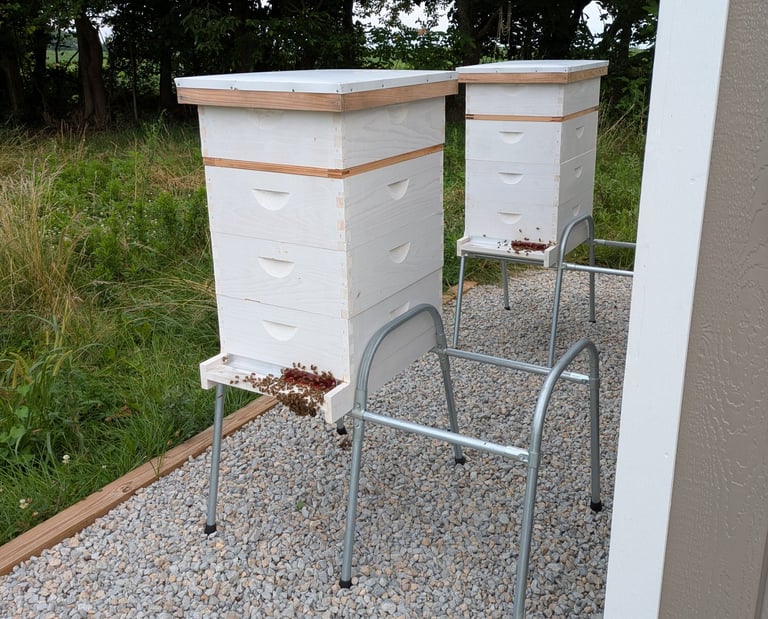
It seems as though most beekeepers we meet have more and more hives every single year. While we appreciate these people supporting the pollinators, we have a lot of other things that require constant attention on our farm. Our hives have grown very large in size, but we try to keep the actual number of hives in our apiary below five. This allows us to produce honey for our family, friends, and those interested in buying some from our farmstand!
Beekeeping Is Not Easy
Like we said, this hobby requires significant time, material investment, and lots of physical effort. The need for continuous learning adds even another layer to the challenge. Beekeeping today is fraught with issues of disease, pests, and the concerns of herbicides and pesticides. Staying up to date on the latest practices and knowledge is critical to keeping your bee population alive and thriving.
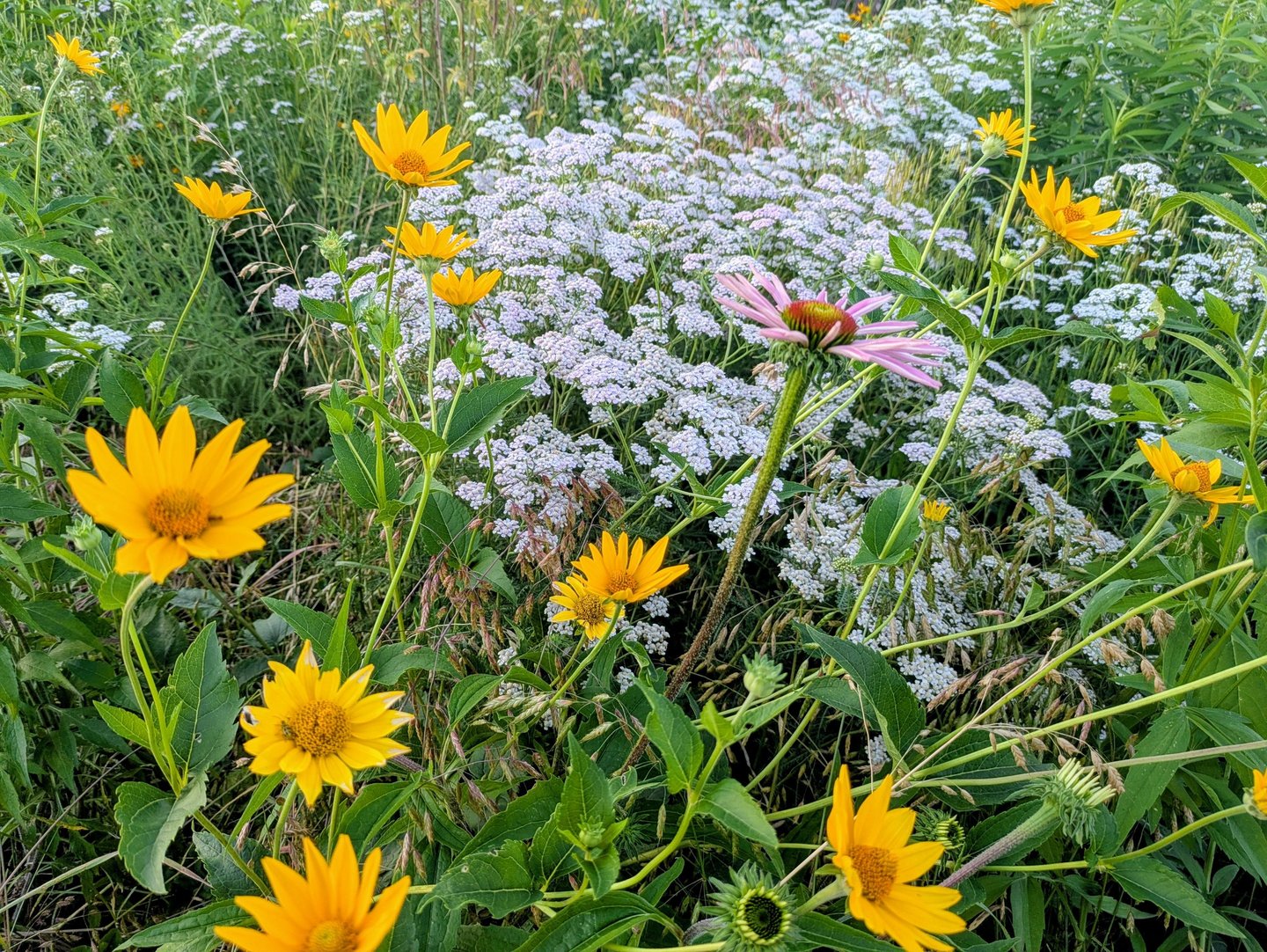
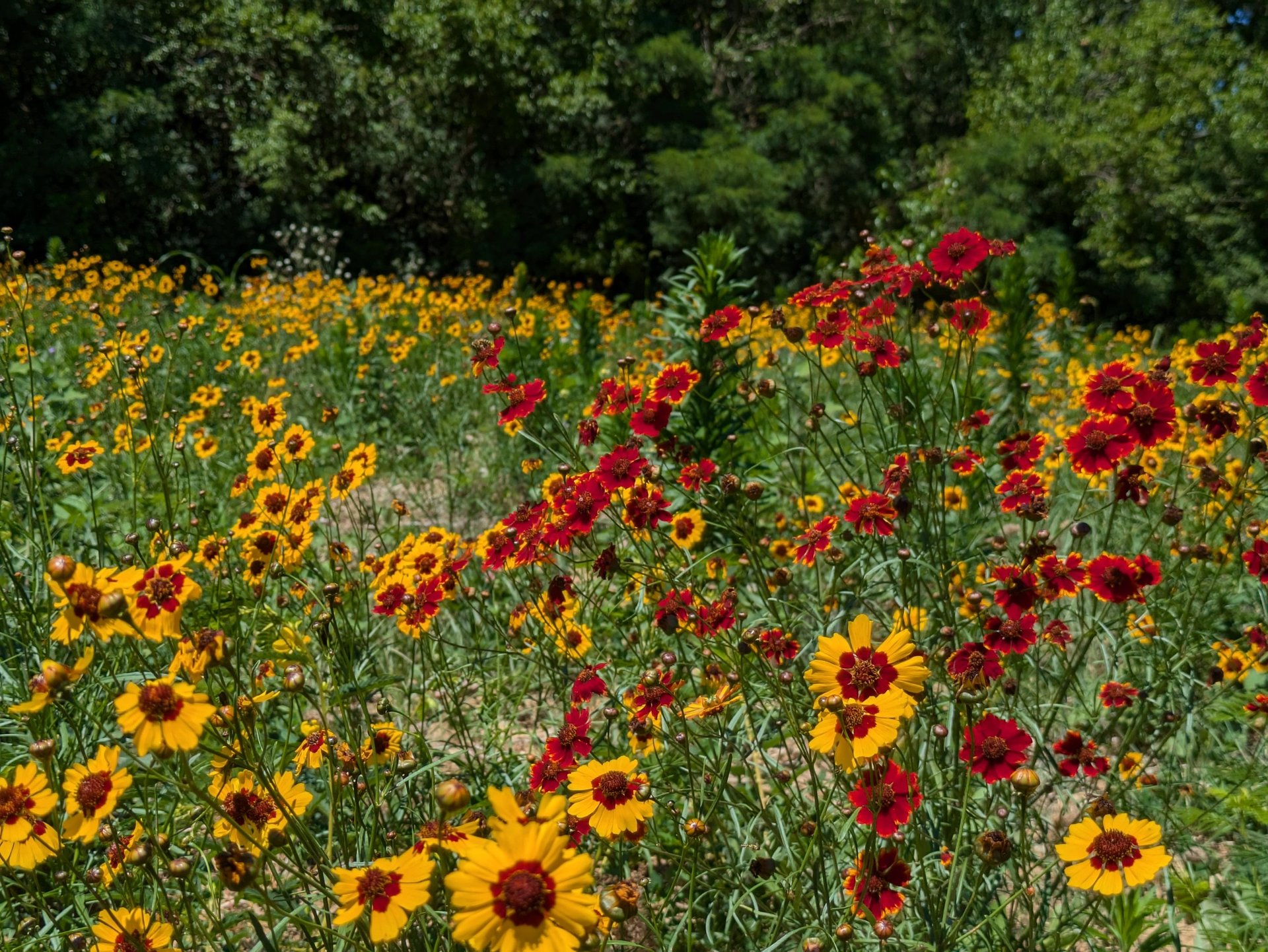
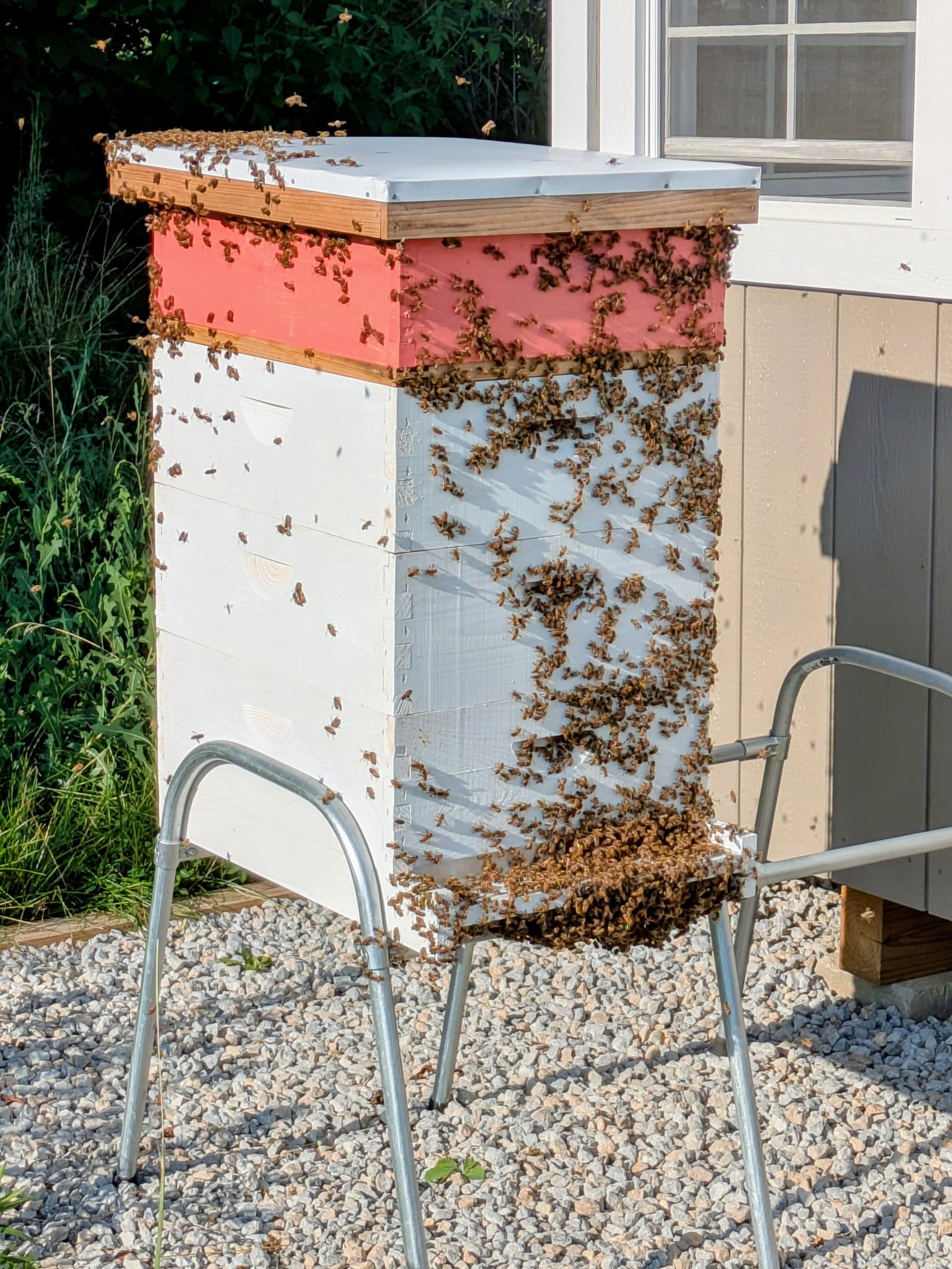
In our first year we dealt with nearly all of the issues that you can expect to cause a problem. Our bees fought off mites, beetles, and ants. We had a queen bee die unexpectedly and lost one colony. A hive somewhere nearby was malnourished in late summer and attacked one of our hives in an effort to steal honey for themselves. This robbing behavior occurs when a nearby hive is short on honey stores as the first signs of winter approach. A photo of the two bee colonies doing battle is at shown here. Thankfully, our hives were very well cared for (in part because of our Pollinator Habitat) and were able to fend off this attempt to steal food. It was still a frightening sight to witness!
No amount of preparation can get you ready for beekeeping; it's just something you learn from experience after experience.
Sweet Reward
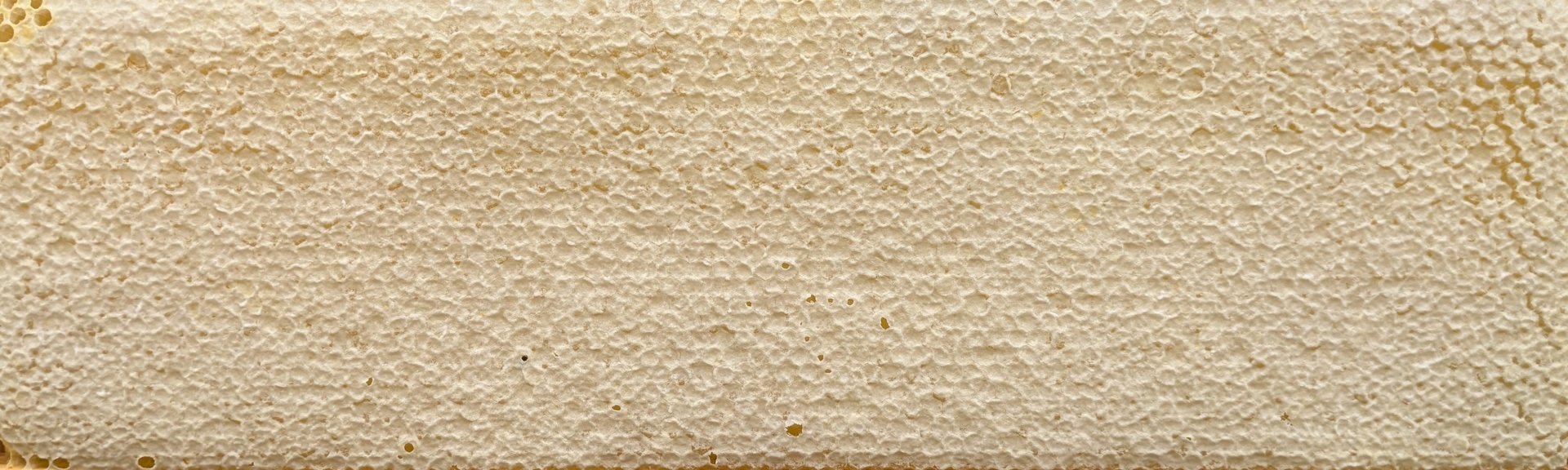
The reward of keeping bees is pretty obvious: honey. Bees are so industrious that they can make gallons upon gallons of honey every year. An active hive can make way more honey than they actually require to survive even the harshest winter. We care for them and they provide us with a little reward. We make sure not to take too much as the best food for bees is the honey and pollen they stored during the spring and summer. When we tuck them in for the winter, wrapping the hive so they stay as warm as possible, we make sure that the cluster of bees have plenty of their honey in the surrounding frames. It's just the right thing to do for all that hard work they performed!