Our Story


Welcome To More Forest Farm
We are a small family farm that started out as a homestead seeking a measure of self-reliance and agrarian living. We have always been interested in improving the land so it's no surprise that within few short years we managed to take on multiple aspects of permaculture and restoration agriculture.
Our family farm is interested in attempting to construct a natural system that provides sustainable food sources while improving the land. There is a tide of new information that reveals how the "standard" farming practices of large single-crop fields have fleeced the soil of nutrients and rendered our cropland dependent on chemical inputs. It easy to see why this practice took hold: specialization enhances profits and farming is a notoriously low-profit industry.
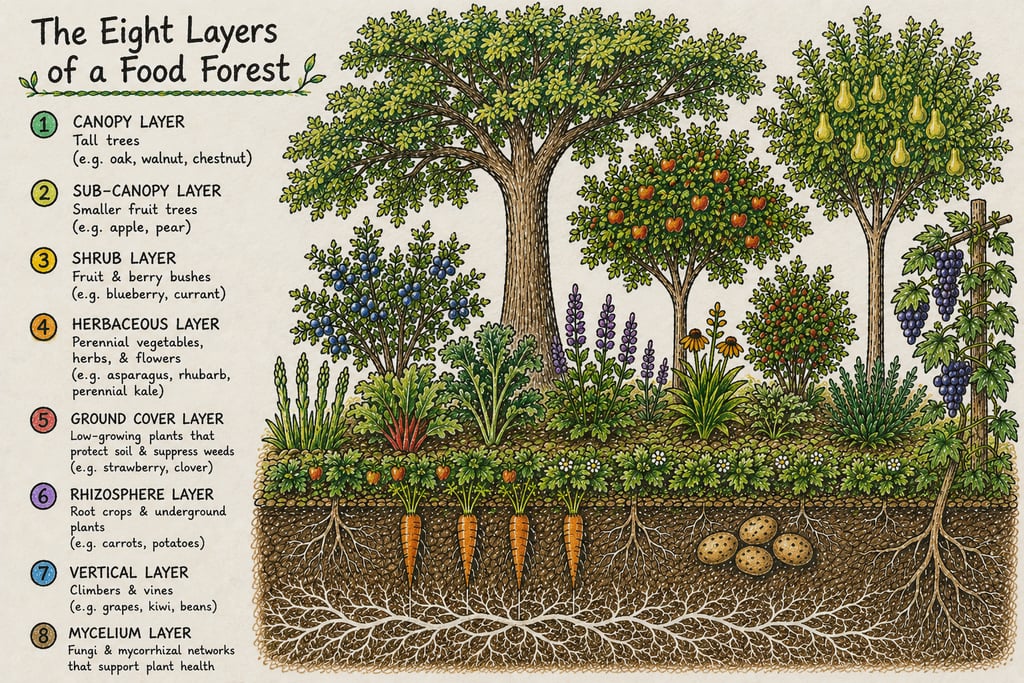
Why More Forest Farm? A forest is a complex, perennial heavy, multi-layered ecosystem. This is exactly what we want the future of farming to become. Food for humans and all other animals can be found at all levels of a forest. The underground mycelium network sprouts mushrooms while the tallest trees produce edible nuts. There is food below your feet and far above your head! Every living plant in between these two layers of the forest could produce crops for humans and livestock. The key to this system is that the largest and longest living plants in a forest (think about huge oak, hickory, and chestnut trees) are able to produce massive amounts of mast--a traditionally underutilized food source. While I'm not lining up to eat acorns anytime soon, it is a very viable food source for livestock. Still, light permeates to the levels below these massive canopies and enables subsequent layering of hard and soft mast producing plants. These are the more directly recognizable and consumable fruits and nuts like apples, pears, walnuts, and pecans. As we continue to the forest floor we pass nut and berry bushes, perennial vegetables, root vegetables, and plenty of other consumable products. This is why we see forest farms as a necessary part of our future. They are a multi-layered system that has the potential to produce food at scale on otherwise underutilized land.
Large fields of a single crop will more than likely always be part of our world; that design maximizes sunlight and minimizes farming effort. But a square foot of a forest polyculture system can actually produce both more food, and more diverse food, than a square foot of traditional system.
We hope that our experiences will inspire you to put effort into turning a small portion of your lawn, balcony, or woods into a thriving multi-level ecosystem that can produce food for you and your family.
Plant Naturally
Leverage Natural Planting Techniques
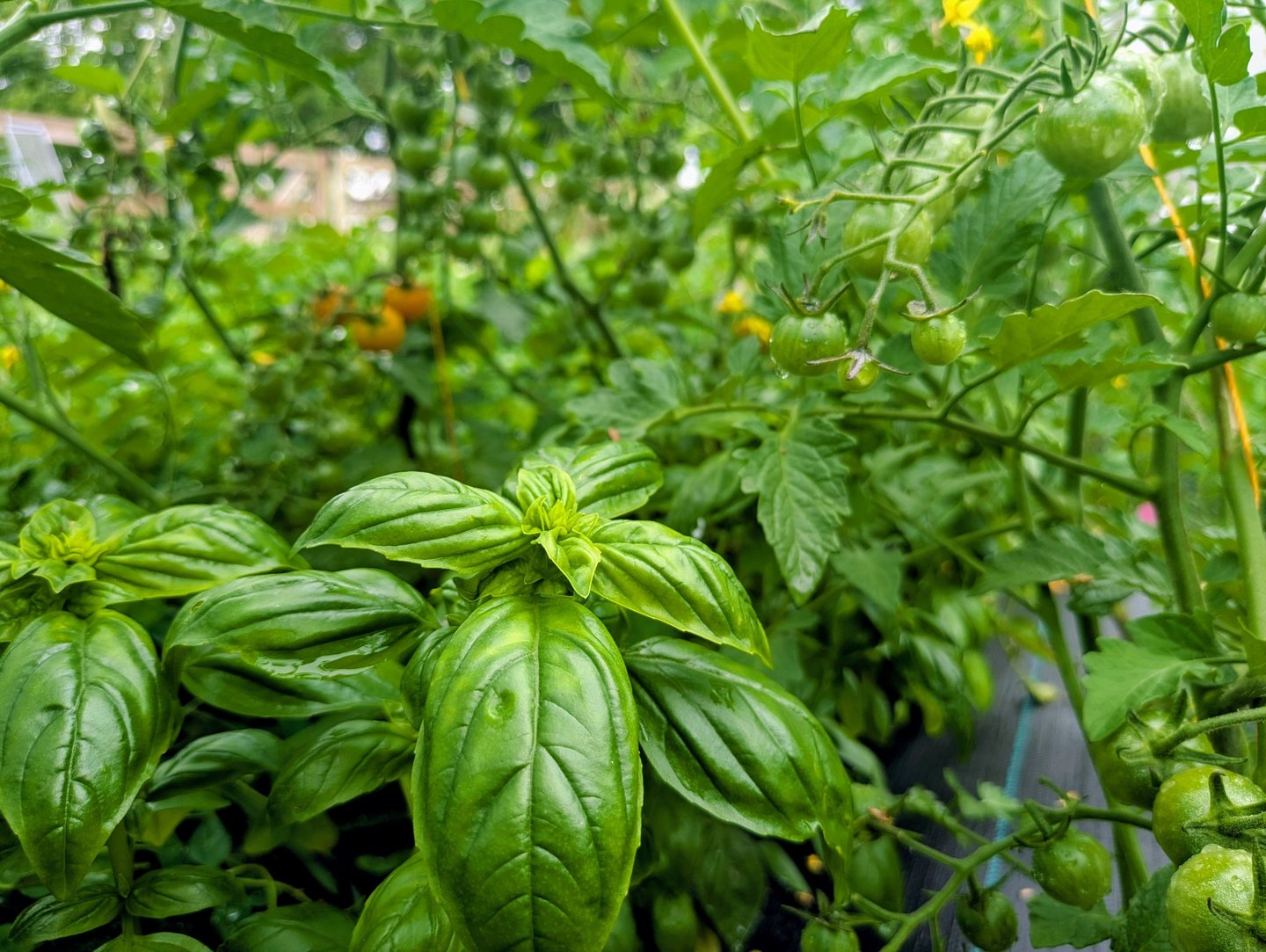
Our planting beds maximize Companion Planting. This is where different crops, flowers, or herbs are grown close together because they are mutually beneficial to each other. Tomatoes and basil are the most well known example of companion planting but there are many others that we use on the farm.
We use Intercropping whenever feasible. This is the process growing two or more different crops in close proximity in the same field during a single growing season. Intercropped plants typically utilize different resources or mature at different times. The "Three Sisters" method of growing corn, beans, and squash together is a great example of intercropping.
Manage Pests Naturally
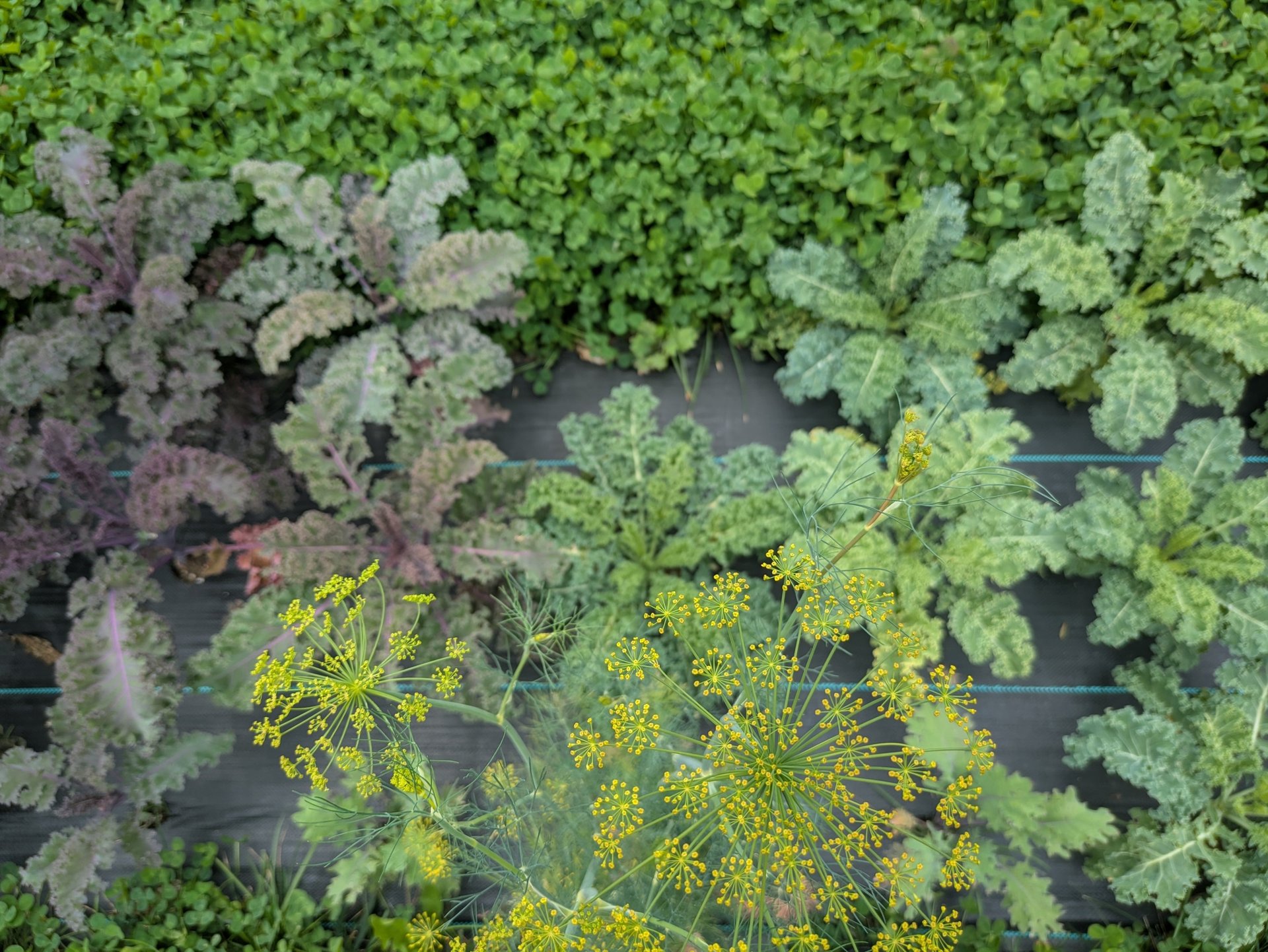
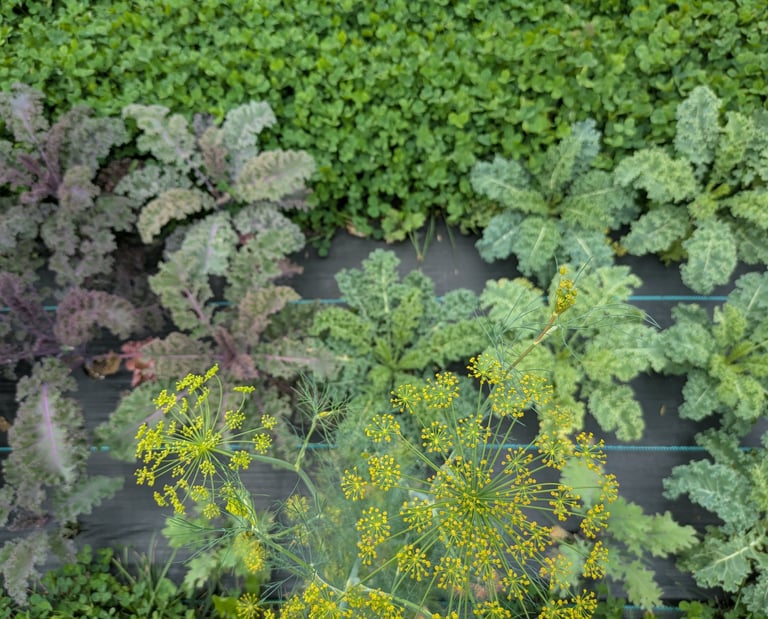
Keeping pests away is a constant battle so we plant some well known Repellant Crops. These are plants that either mask the scent of a desirable crop or create a smell that is undesirable to pests. Dill, fennel, and marigolds are well known repellant crops you will find throughout our planting beds.
It's impossible to repel every insect that wants to eat our crops so we aways have Trap Plants in our field. These are plants that are more attractive for pests compared to the production crop; the pests are far more likely to target (eat) the trap plant and not the desirable crop. Nasturtiums, sunflowers, and Hubbard squash are three primary trap plants you will see integrated into our beds.
The insects that eat our crops have their own enemies and we welcome them to our garden by creating a habitat desirable to Beneficial Insects. Ladybugs, hover flies, and green lacewings are predatory insects that consume aphids and other garden pests. We attract these insects with alyssum, marigold, cosmos, and sunflowers.
Feed The Land And Everything That Lives On It
Transforming Neglected Land
We wanted the land of More Forest Farm to reach it's maximum potential. Sadly, even wildlife struggled on our land due to rampant honeysuckle in our woodlands. Our goal was to build a farm that was able to support wildlife, humans, and livestock while still enabling plant life to flourish. We knew that taking care of the soil biome, our plants, and our forest would enable this. If we were able to get things moving in the right direction, together the flora and fauna would create a symbiotic relationship. The plants would feed the animals and the animals would supply nutrients to the plants. All we had to do was correct the problems that were initially blocking this natural process. After years of manual labor and planting nearly a thousand trees, we are happy to report that our forest is heading in the right direction. Deer, squirrels, rabbits, turkeys, foxes, coyotes, and innumerable birds are now flourishing in our woods. Pollinators are everywhere and the forest system has started to create browse for herbivore wildlife as the natural seed-bank in the soil blossoms again after years of lying dormant. The transformation was not quick or easy... which is why we dedicated a page to our Food Forest.
Integrate Livestock
Put Animals To Work
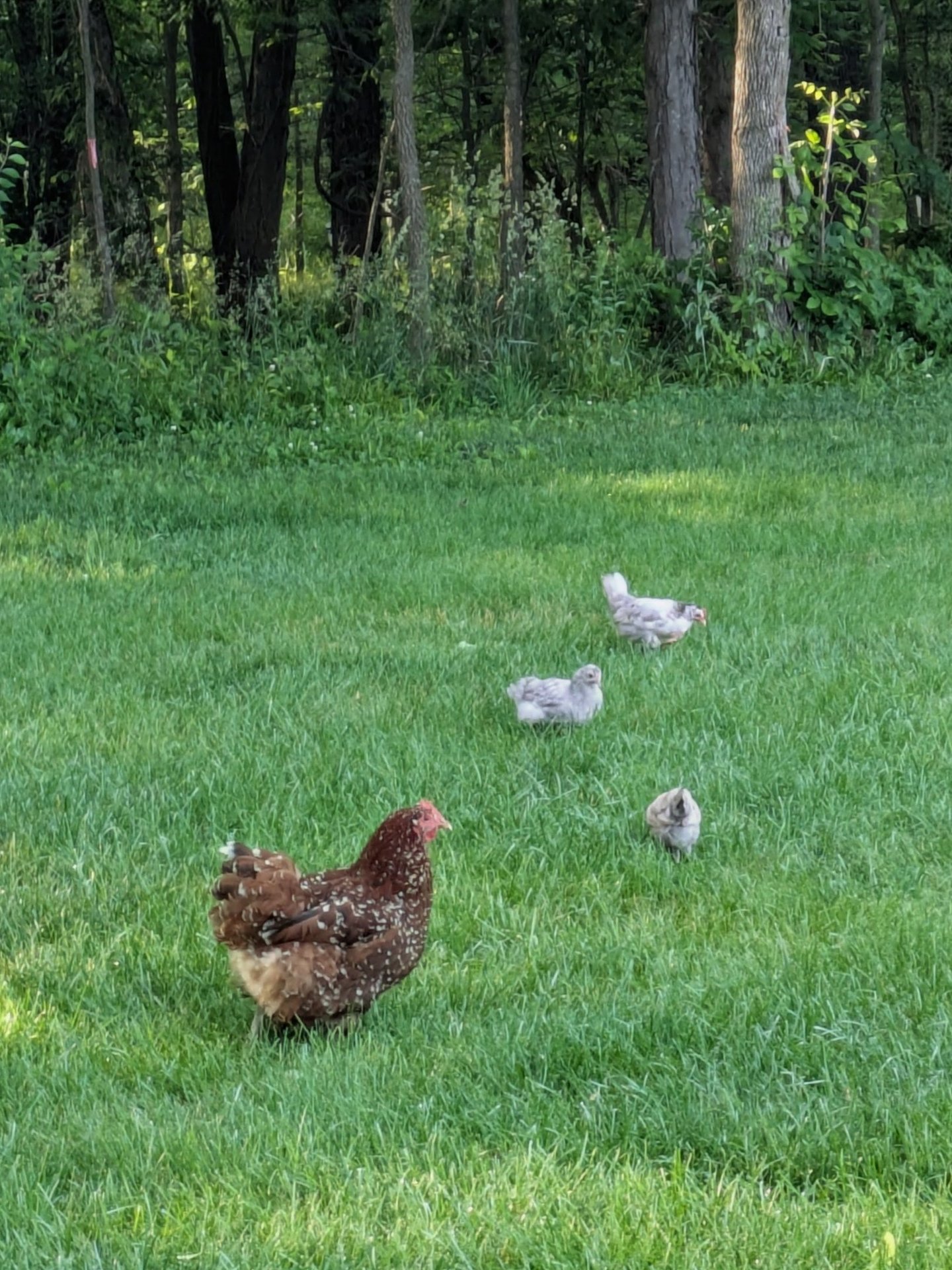
Anyone that works with animals will tell you that managing livestock is a never ending task. But, at the same time, it is amazing to see what well managed livestock can do to help an ecosystem thrive. Chickens may not be the first animal you consider as playing a significant role, but they are work non-stop to turn soil, consume pests, and reintegrate nitrogen for plant-life. They provide us with Eggs and are able to regenerate their flock with minimal effort and intervention on our part.
Goats Are Always Hungry
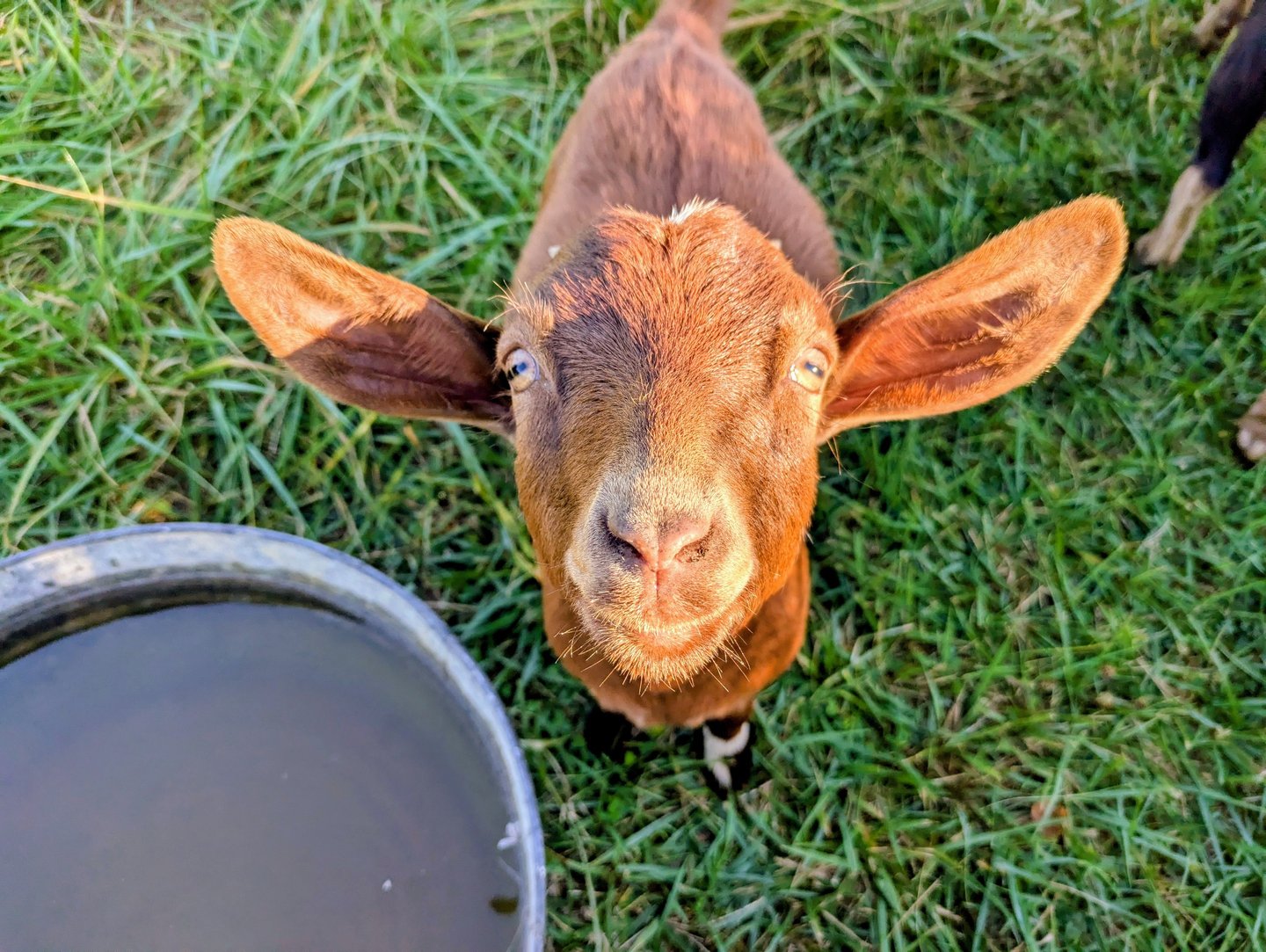
For control of woody shrubs or leafy plants you would have a hard time finding anything more effective than a goat. They will happily consume the leaves of invasive honeysuckle, poison ivy, autumn olive, Bradford pear, and myrtle without end until the plants finally die. However, goats will also happily eat every ornamental or garden plant within range if you aren't careful! They are the just like a rebellious teenager: always hungry, a little mischievous, very overdramatic, and prone to escaping.