Food Forest
"I want to be able to start a hike through the woods hungry, but finish with a full belly and my pockets filled with nuts and berries."
- The Food Forest Guiding Concept
Regenerative Agriculture And The Food Forest
Our interest in regenerative agriculture at More Forest Farm led to the largest undertaking to date on our farm, the quest to turn our wooded acreage into a Food Forest. While the concept of a Food Forest is easy to understand, the implementation is far from trivial. We were interested in a forest that would not only feed wild animals (deer, squirrels, rabbits, turkeys, birds, etc.) but also humans and livestock. A forest heavy in oak and mulberry trees might sustain huge a population wild animals but the support would end there. We also want our Food Forest to have hard and soft mast producing trees and plants that are more palatable to humans. Likewise, we believe the ability for tree crops to produce high-yields of fruits and nuts every year should be leveraged to feed livestock.
Our vision was to create such a forest. This forest would, first and foremost, support an abundance of wildlife by restoring the natural order of nuts, seeds, forbs, legumes, berries, and grasses for foraging. The forest would benefit wildlife even further by establishing long-lived tree crops that produce nuts and fruits throughout the spring, summer, fall, and winter (yes, even winter) seasons to ensure nearly year round access to food. This natural supermarket should bear crops that are highly desirable to humans during these same seasons whenever possible. Finally, the More Forest Farm woodland should support silvopasture in a responsible rotational grazing manner to feed livestock while the livestock in turn feed the soil biome and thus the entire forest ecosystem.
Phase 1: Remove Invasive Plants
The Primary Invasive
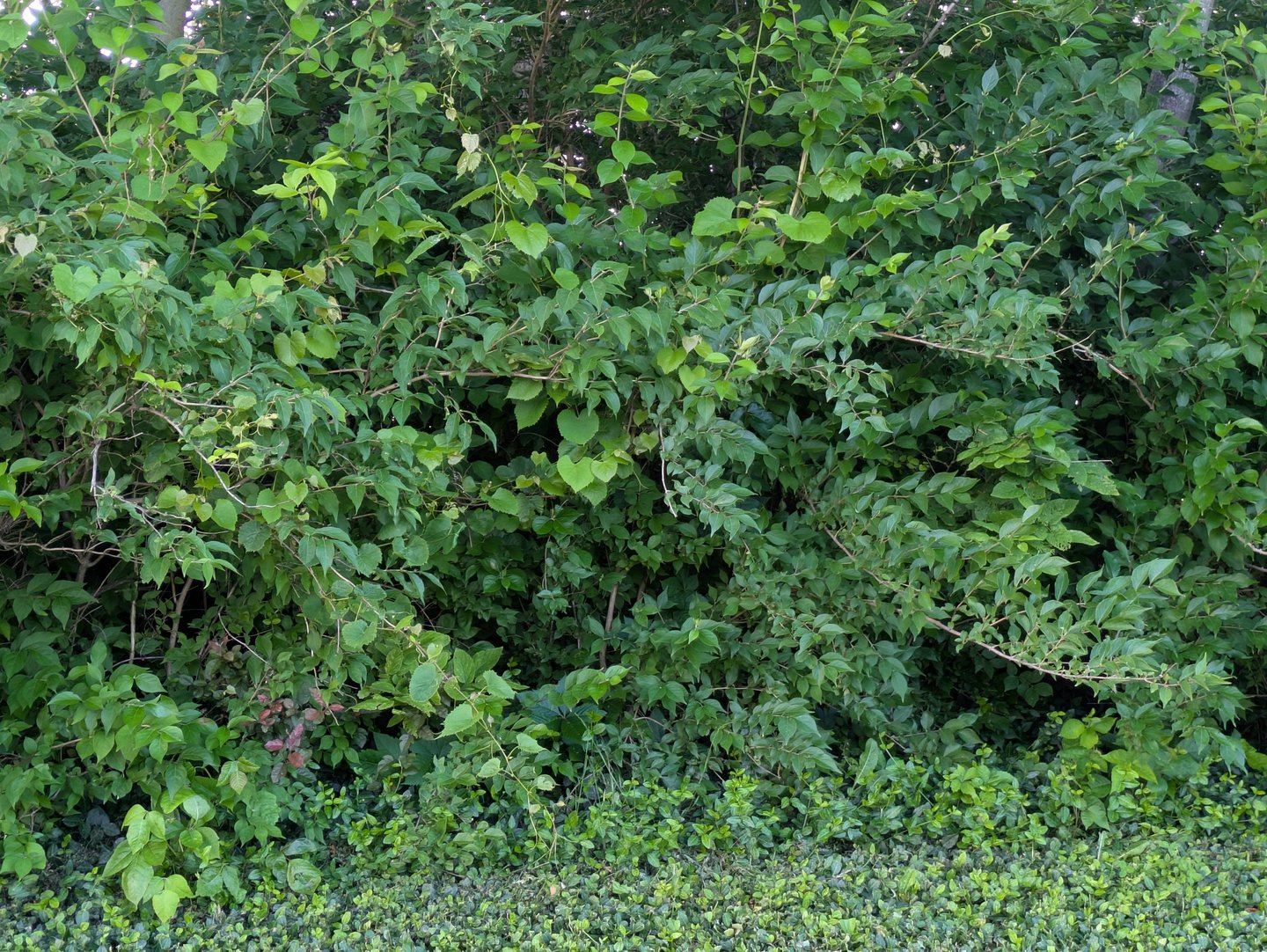
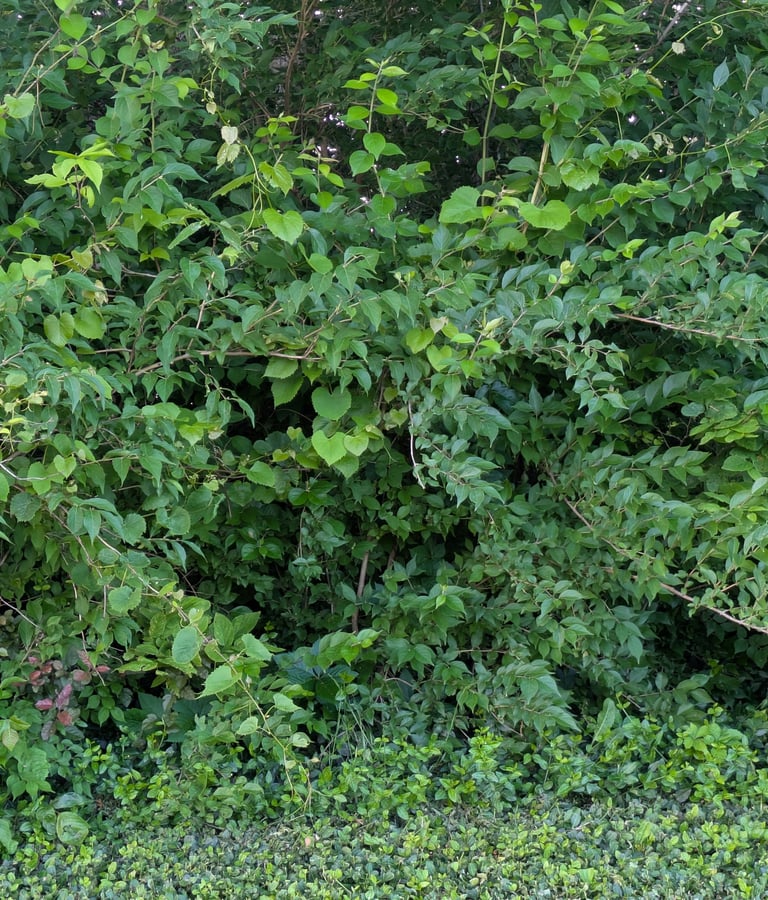
Honeysuckle was introduced in the mid to late 1800s as an ornamental plant, wildlife food, and for erosion control. Sadly, it's ability to outcompete and shade native species while forming massive thickets void of other vegetation was unanticipated at the time. Once you train your eyes to see it, you will see it everywhere. Our forest was a lightly-wooded cattle pasture that went out of use in the 1970's. Honeysuckle quickly took over this area and snuffed out nearly all plant life that was unable to pierce its mid-story canopy. Walking through our woods felt extremely "suffocating" because of the oppressive growth. It was difficult to see any more than a few feet in front of you or determine your current direction. The honeysuckle had to be removed. Thus, we picked up our chainsaws and started the arduous process of returning our forest back to its natural state.
Under The Honeysuckle
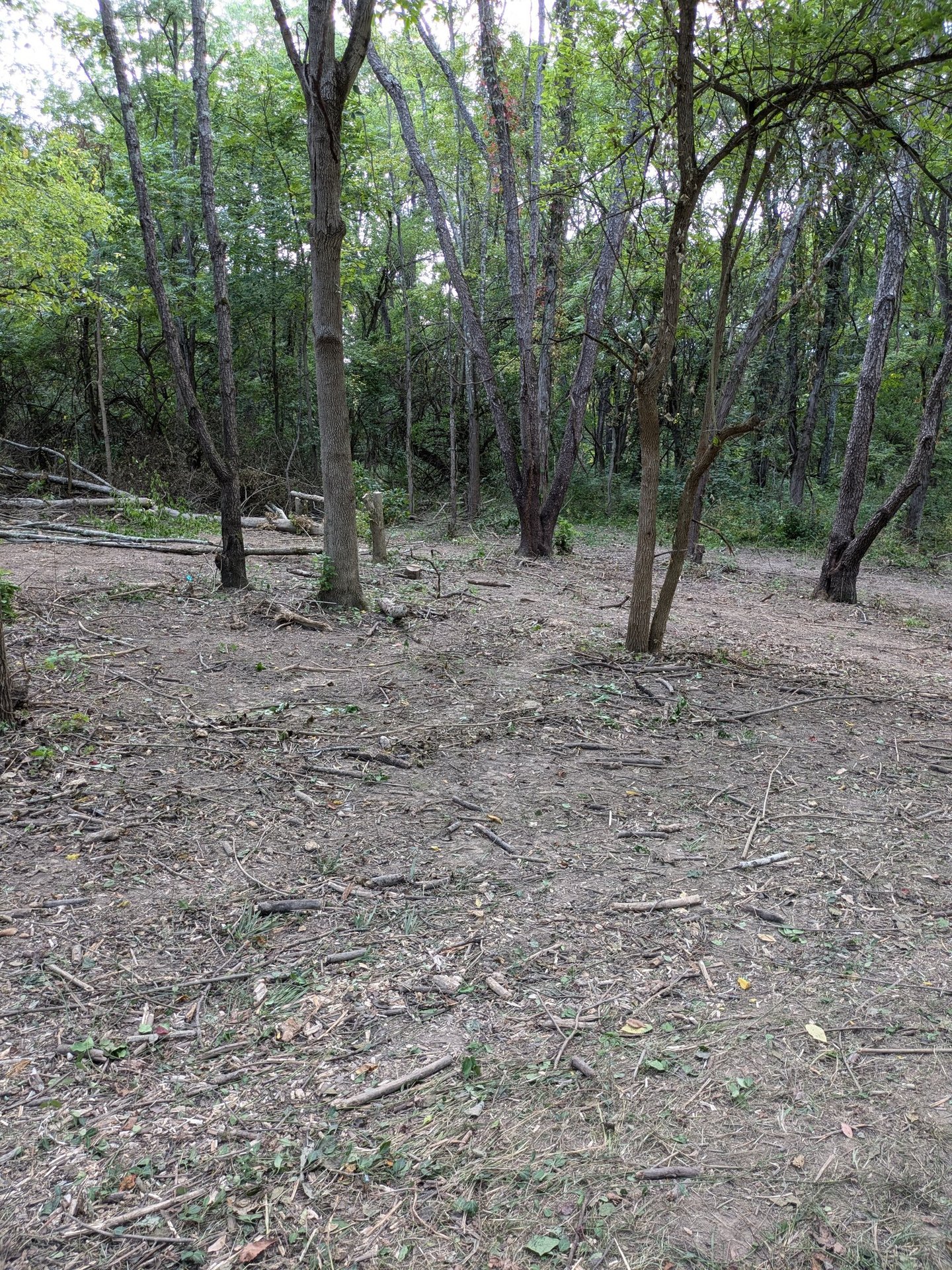
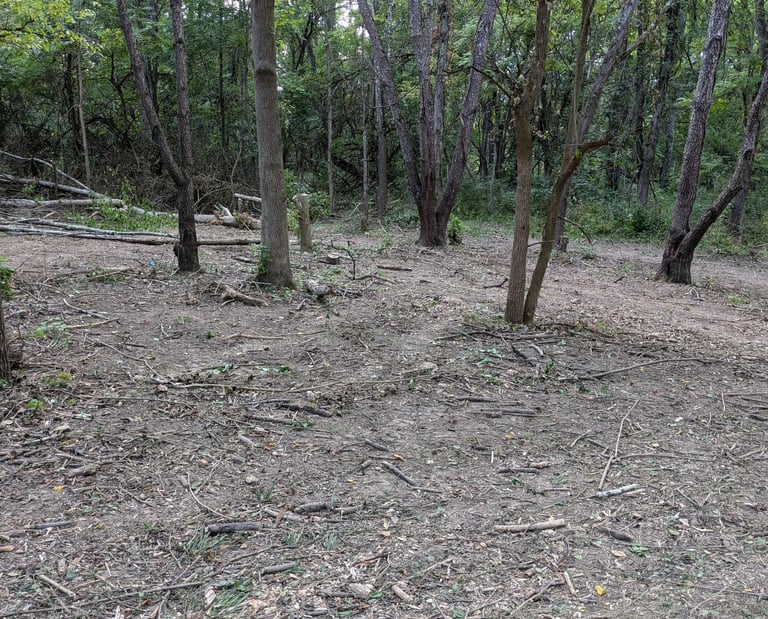
When you attempt to traverse a forest infested with honeysuckle you quickly realize how difficult it is to simply walk. Honeysuckle trunks umbrella out around waist height so you end up both climbing over and ducking under branches. Often you are so busy looking at what is in your way that you don't really look down. Once the honeysuckle is removed however, you can't help but to look down. This picture illustrates what the forest looks like after removing this invasive plant. Prior to working the area in the foreground, we were unable to see more than a few feet in front of us. Now, having cut and removed all the honeysuckle, only a few larger trees remain. The ground is completely barren because honeysuckle was inhibiting any undergrowth. This is a shocking change to behold.
It's A Desert
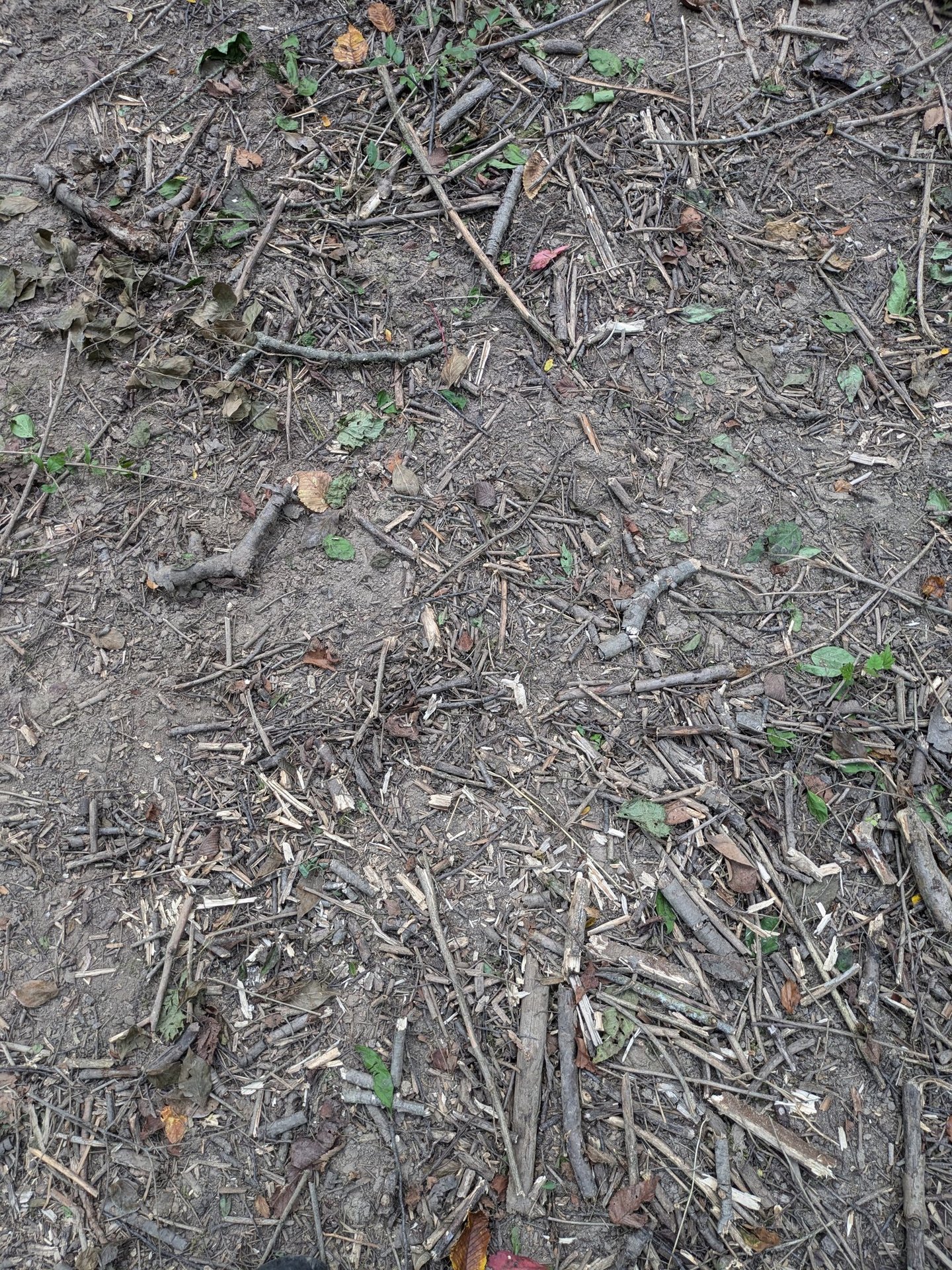
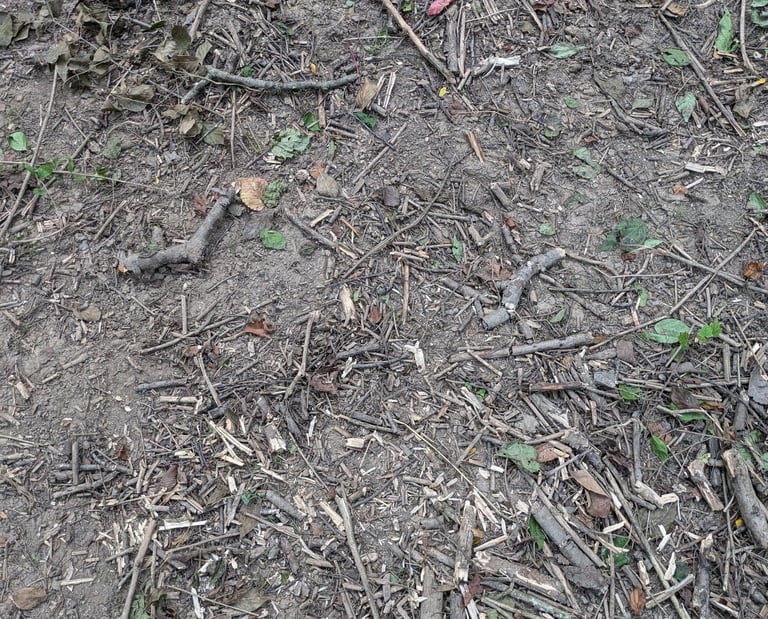
The land under honeysuckle is effectively a desert. Nothing was able to grow here because all of the light, water, and soil nutrients were being sapped by the honeysuckle. The dirt was dry and lifeless. This is not what a forest floor should look like and it's now obvious why animals also abandon these infested areas. There aren't any nuts, seeds, forbs, legumes, berries, or grasses upon which to forage. Even the larger trees that manage to break through the top of the honeysuckle have their growth inhibited by 50% because of the limited water, minimal nutrients, and soil biome death that occurs under this invasive plant.
Rebuilding The Layers
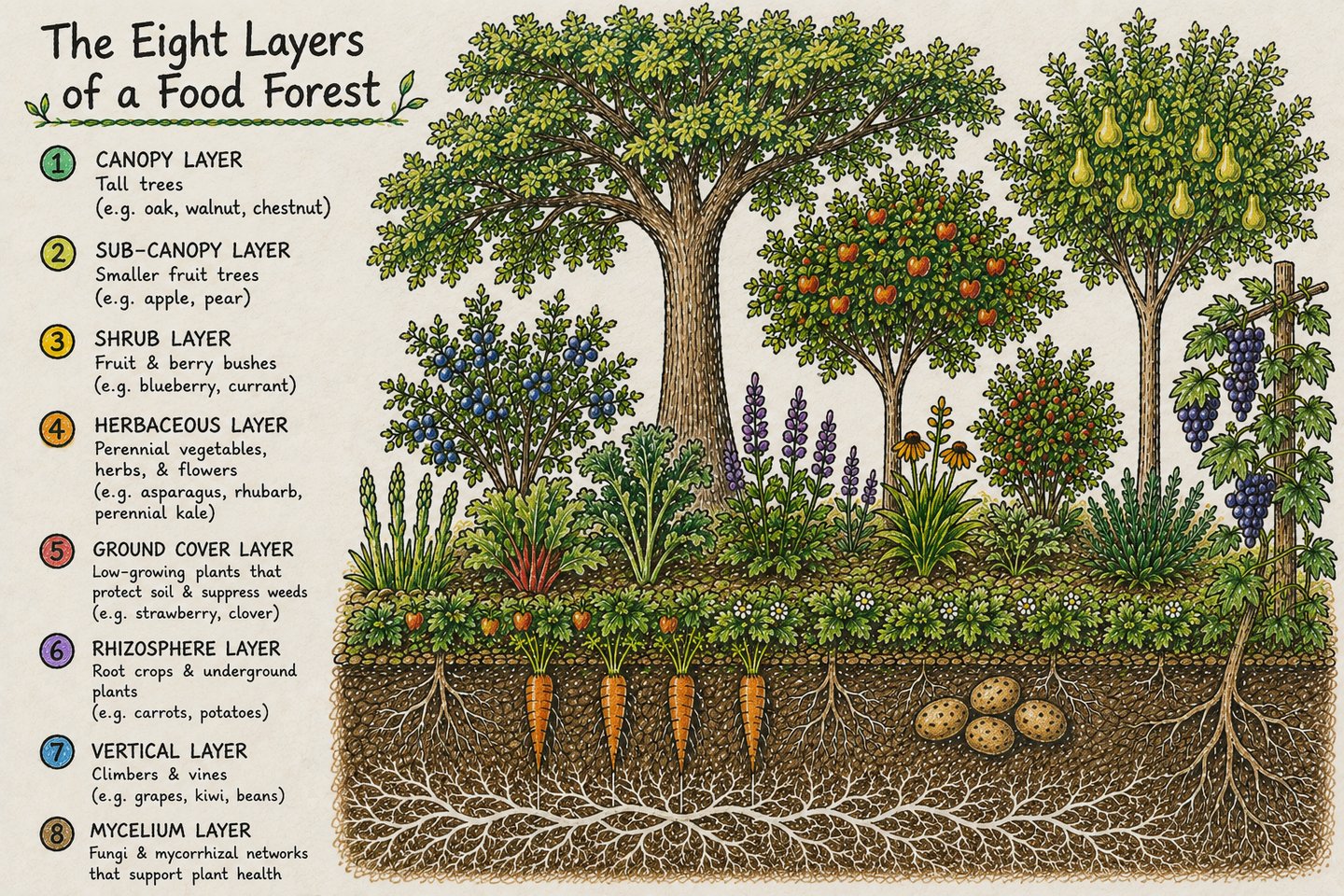
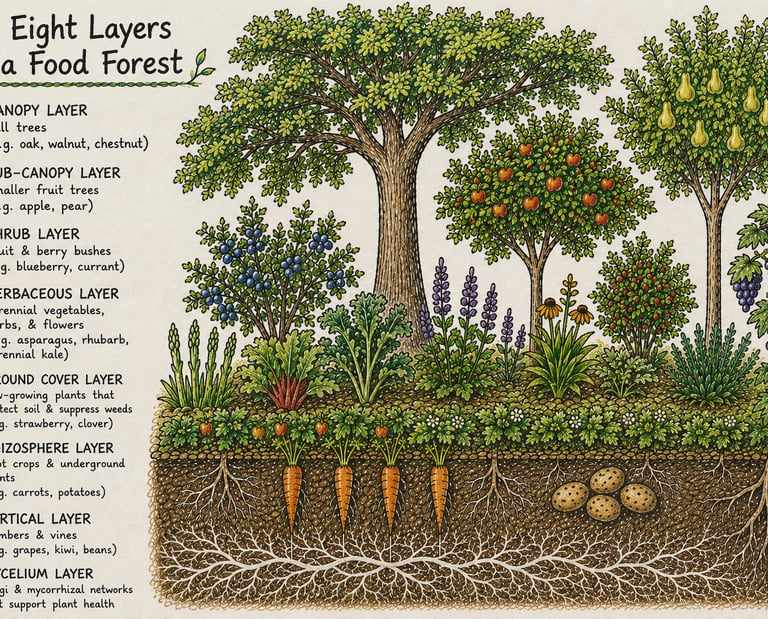
There are multiple ways to categorize the layers of a forest, but we like the 8 layer model. While this diagram shows where we want to go, you can also use it to understand how honeysuckle upset the existing forest. Honeysuckle is a large shrub that forms a sub-canopy layer so it would sit around layer 2. It's easy to observe (photos above) how a significant honeysuckle canopy eliminated any small shrubs, the herbaceous layer, the ground cover layer, the rhizosphere layer, and the vertical layer. I believe the mycelium layer was eliminated also as we didn't see any visual evidence of it and the dirt left behind seemed dry and lifeless. Obviously, honeysuckle greatly deteriorated this forest biome and we need to put effort into rebuilding these layers.
Phase 2: Planting and Protecting New Growth
Bareroot Trees and Shelters
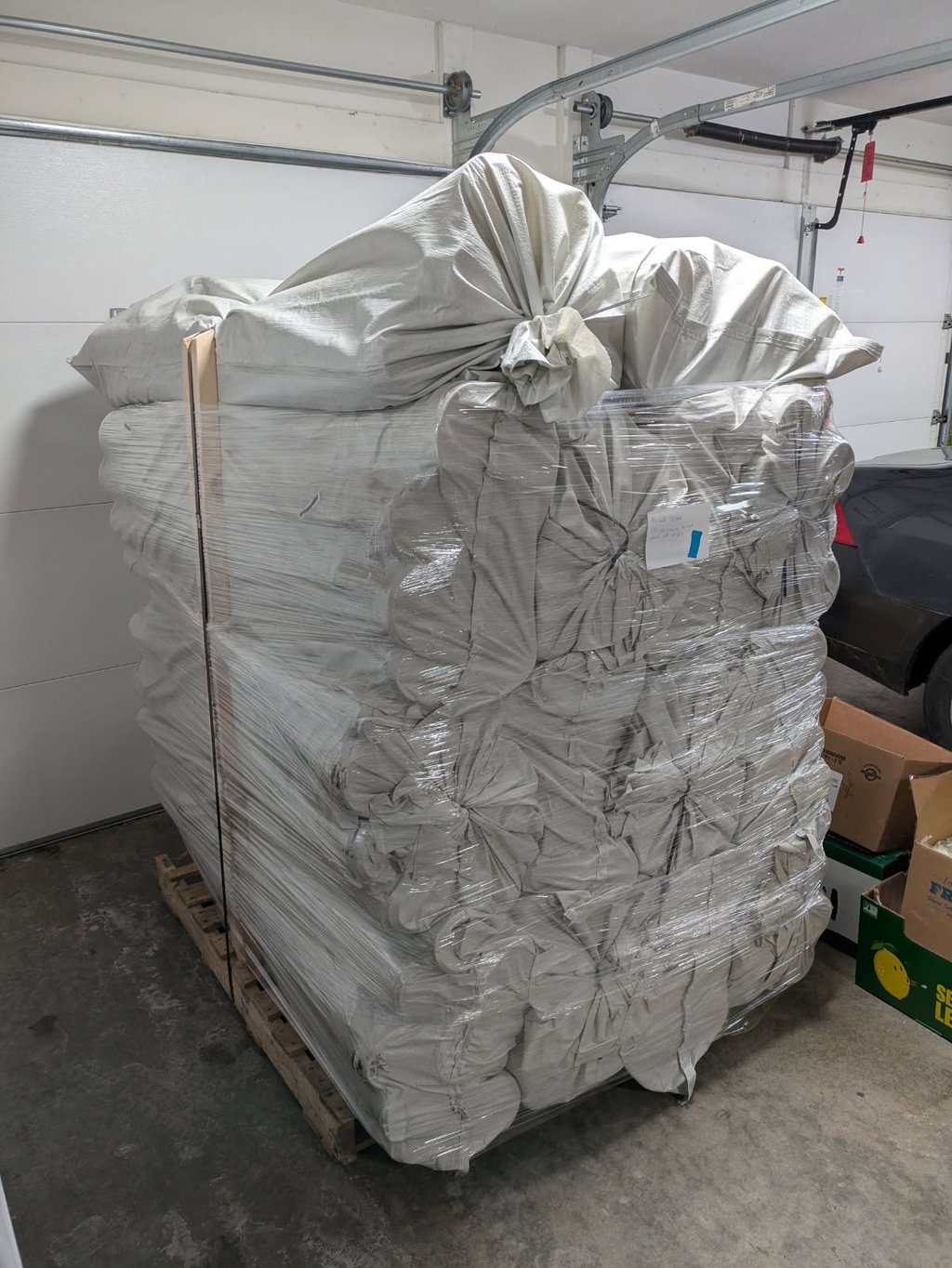
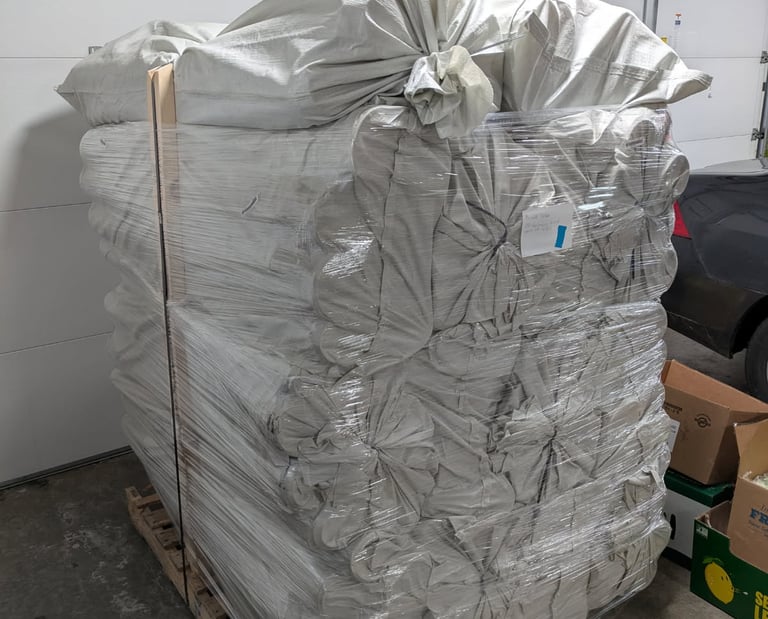
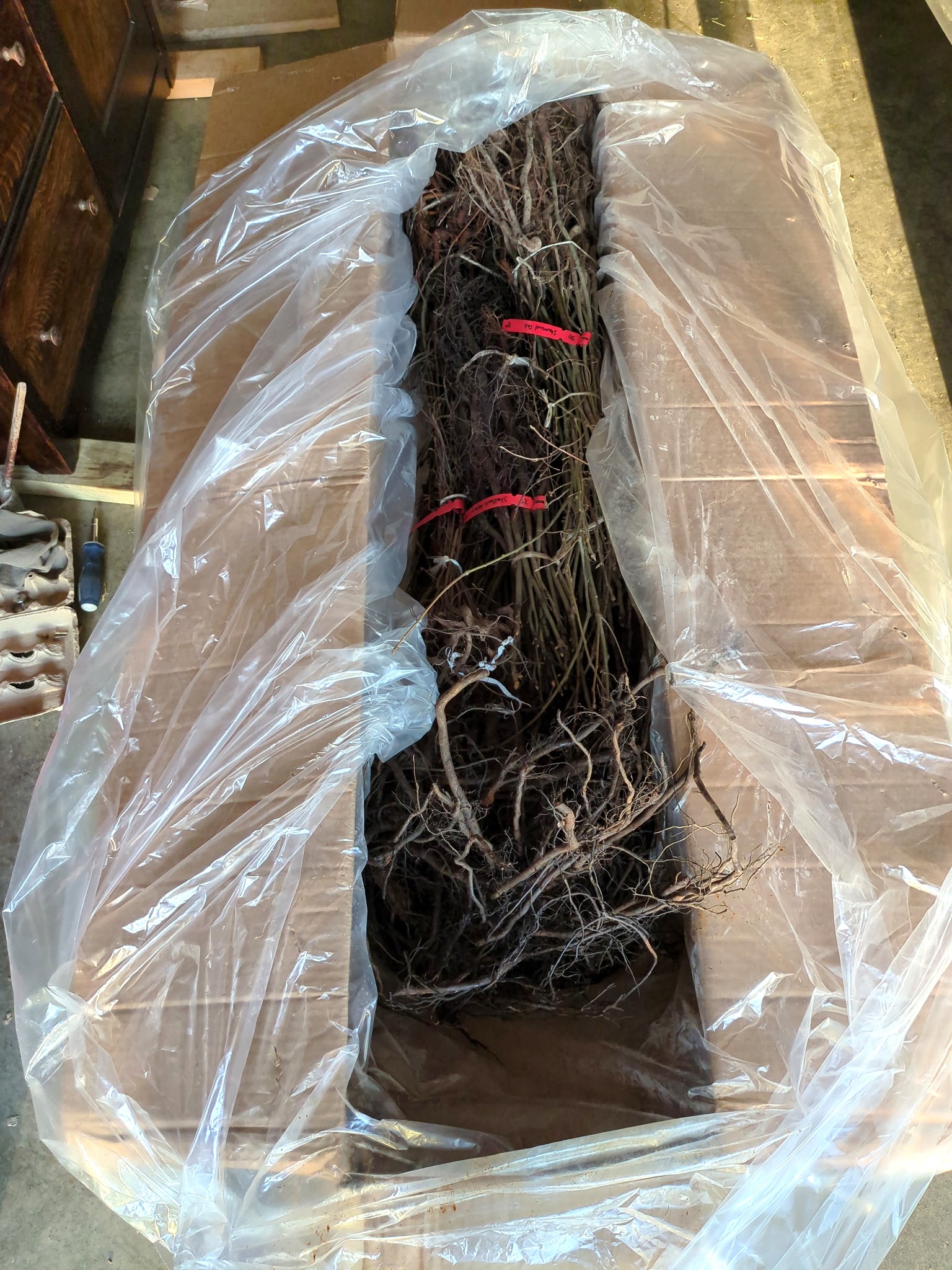
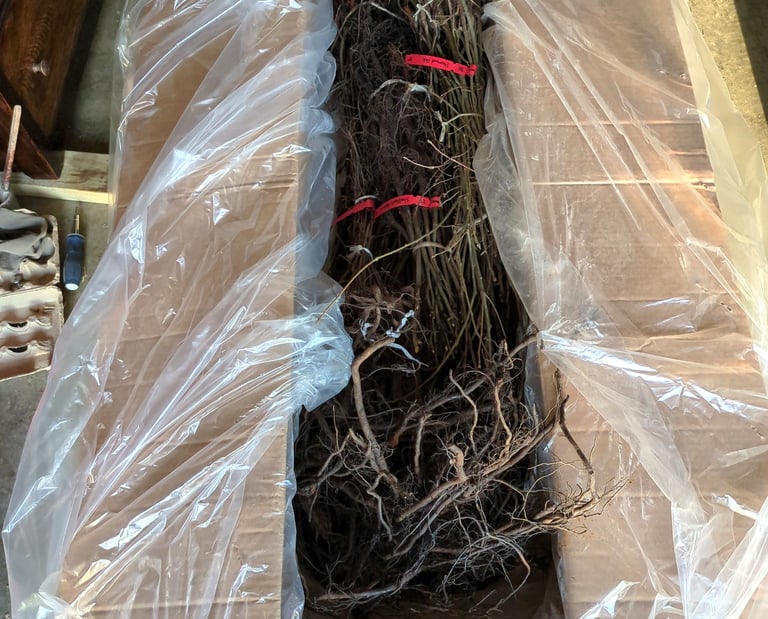
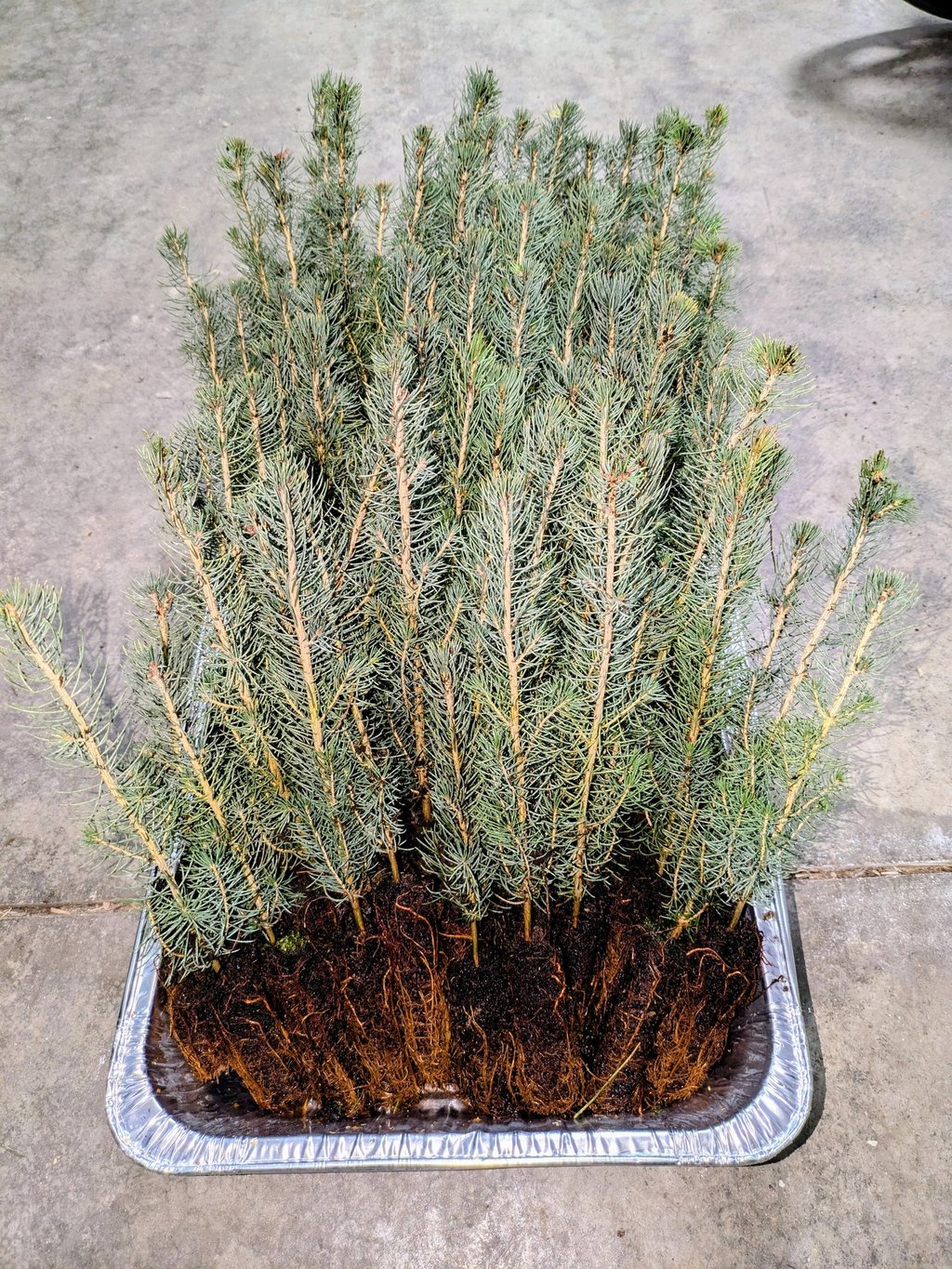
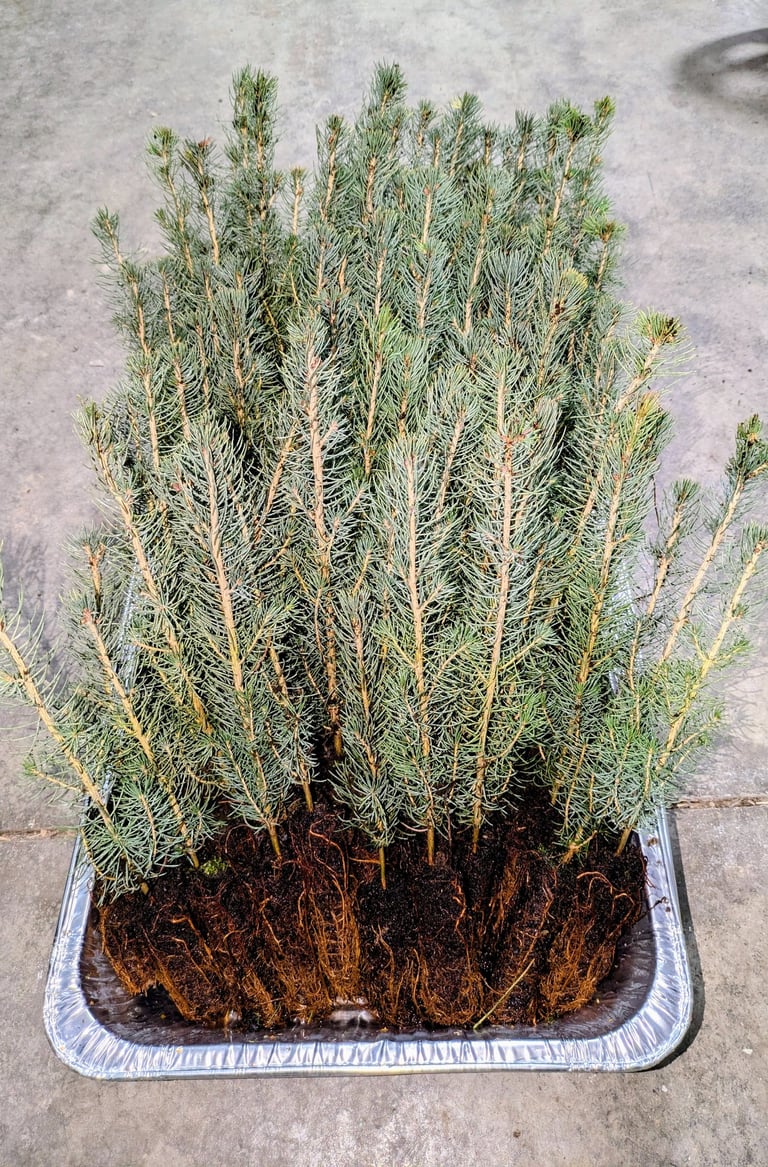
We had a list of what we needed to plant but locating those varieties at a nursery took some time as not every nursery offers bareroot trees and we wanted to order from as few locations as possible. So, after a few spreadsheets estimating orders and shipping costs, we started to receive our baby trees! The pine and spruce trees came with nice soil plugs that were easy to plant with a small auger. The other varieties came in tangled bundles that, although they looked lifeless, were our future forest in a dormant state. It was actually quite shocking (and efficient) how many trees were able to be packed in these boxes. We also accepted delivery of 800 tree tubes on a single pallet. Seeing tree tubes stacked over six feet high was easily the most visual representation of the amount of work ahead of us. This was not going to be easy.
A Dibbler and Shovel
Trees with smaller roots were planted with a tree dibbler, staked, and tubed. Some of our varieties came with larger root systems that required a full 2-5 gallon sized hole be dug with a shovel. Although this took much longer to accomplish, a larger root system means a larger plant and faster growth. So, despite the extra work, we were happy to dig these larger root systems into the earth in the hope that we would see faster growth returns. These young trees were also staked and tubed.
Protect The Baby Trees
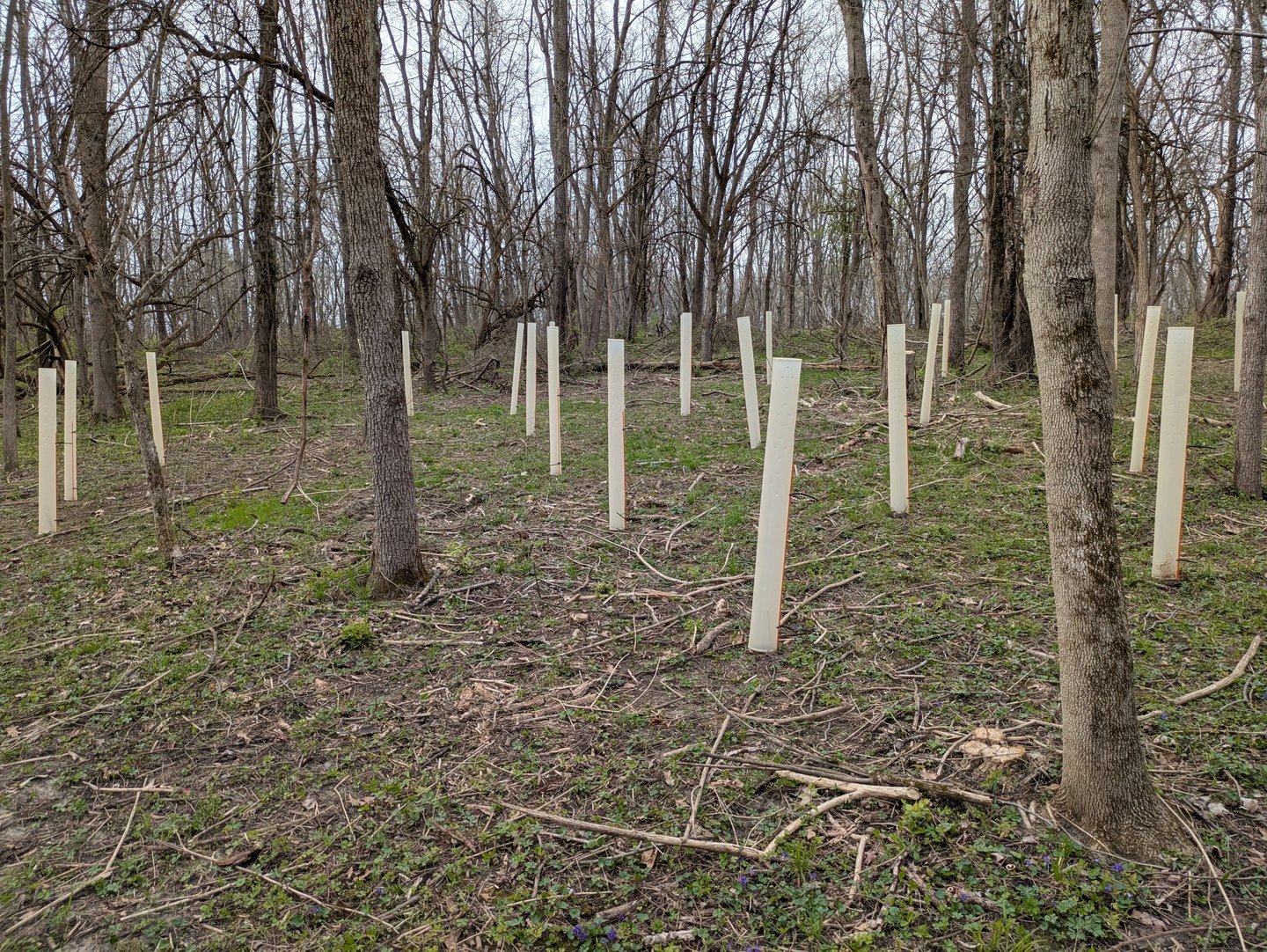
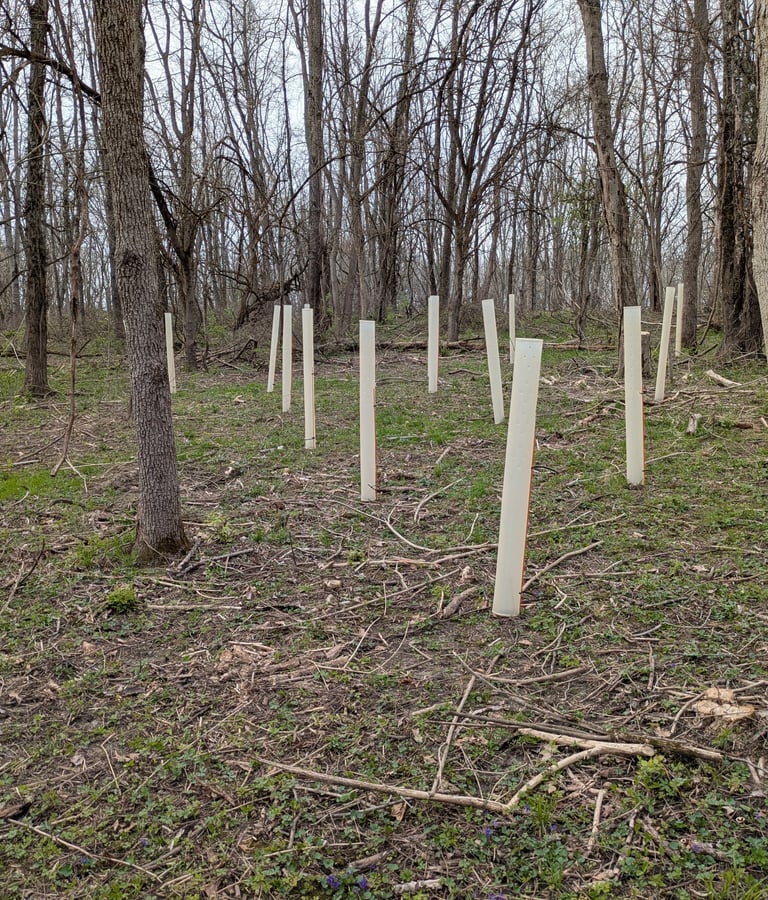
Each bareroot tree requires a stake and shelter tube. The shelter helps the tree grow but, more importantly, it's the primary source of protection from wildlife browsing. A deer could easily eat a full day of effort planting if the trees were left unprotected. Plus, without any other plant growth to hide among, these new trees stand out a lot. This is why the shelters, although they cost more than the trees they protect, are a requirement for reestablishing a woodland.
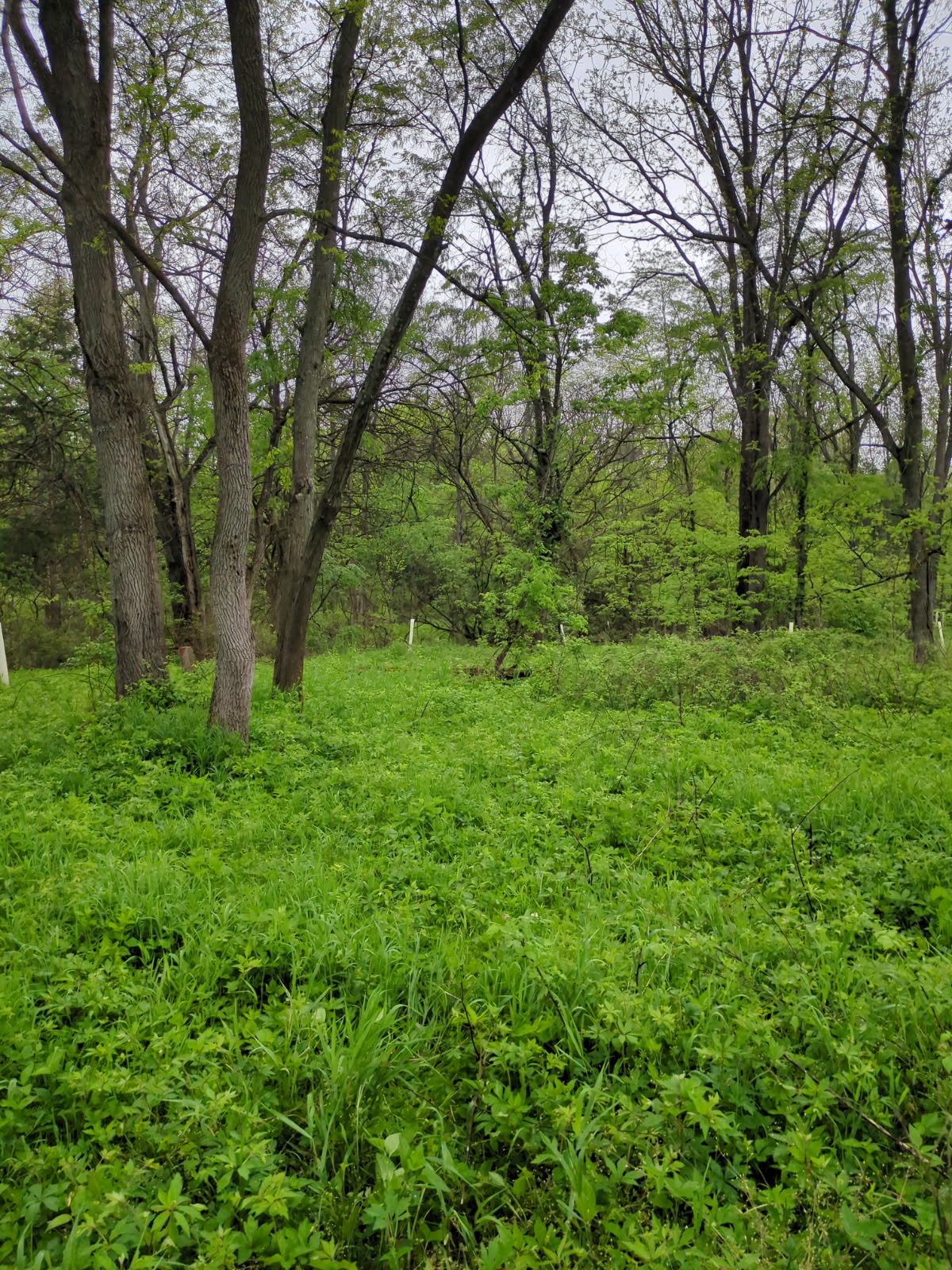
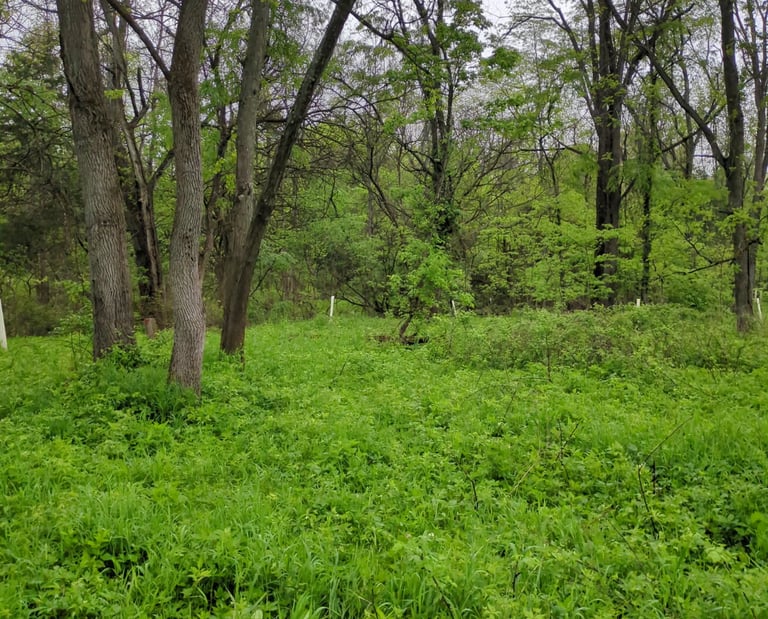
In this photo you can also see the first emergence of green plant life as unobstructed sunlight finally hits the forest floor. This is the native seed bank of the soil coming back to life after years of lying in wait. It is was an amazing sight to look at the barren land (pictures above) slowly start to show signs of normal life.
Additions To Our Forest
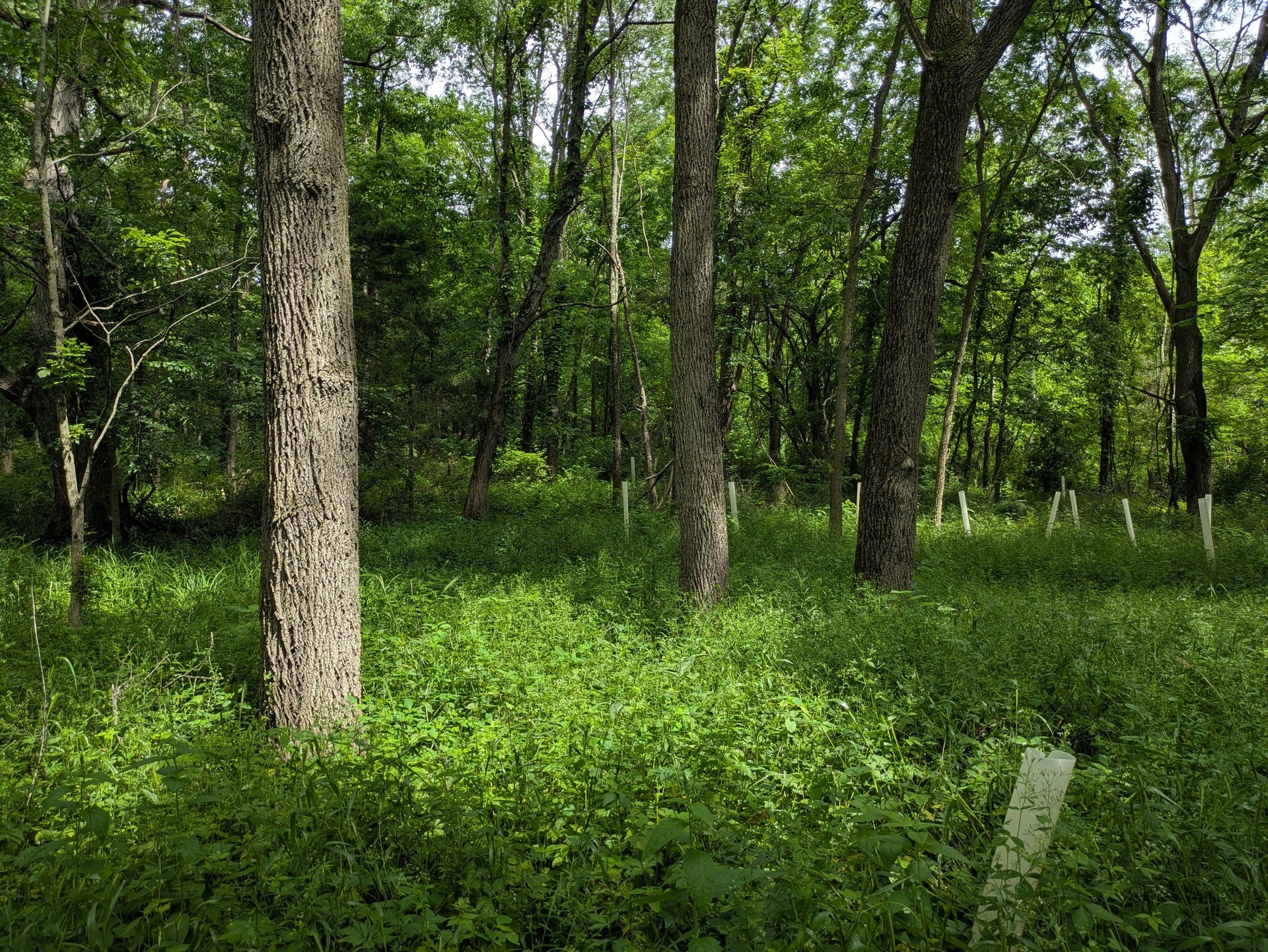
We added over 800 bare root trees, bushes, and plants to our woodland in order to build our own Food Forest. Here are some of our additions:
Sugar Maple
Paw Paw
Pecan
Crabapple
Cranberry
Blueberry
Wild Black Raspberry
Shellbark Hickory
American (hybrid) Chestnut
Butternut
Red Mulberry
Swamp White Oak
Shumard Oak
Black Oak
American Hazelnut
Common Elderberry
Juneberry / Serviceberry
Currant
Nannyberry
Blackhaw
Loblolly Pine
Norway Spruce
When Will It Be Done?
It will take years for the food forest to reach completion and it is tough to admit that we may not even see the 'fruits' of our effort. The lifecycle of trees can far exceed that of humans but we know the work here will persist far beyond our time. It is our sincere hope that our work on More Forest Farm inspires others to undertake similar efforts. Your hands will be dirty and your muscles will be sore but the payback will be amazing if we can all create healthier food-generating ecosystems.
Phase 3: Continue The Fight
Plant And Replant
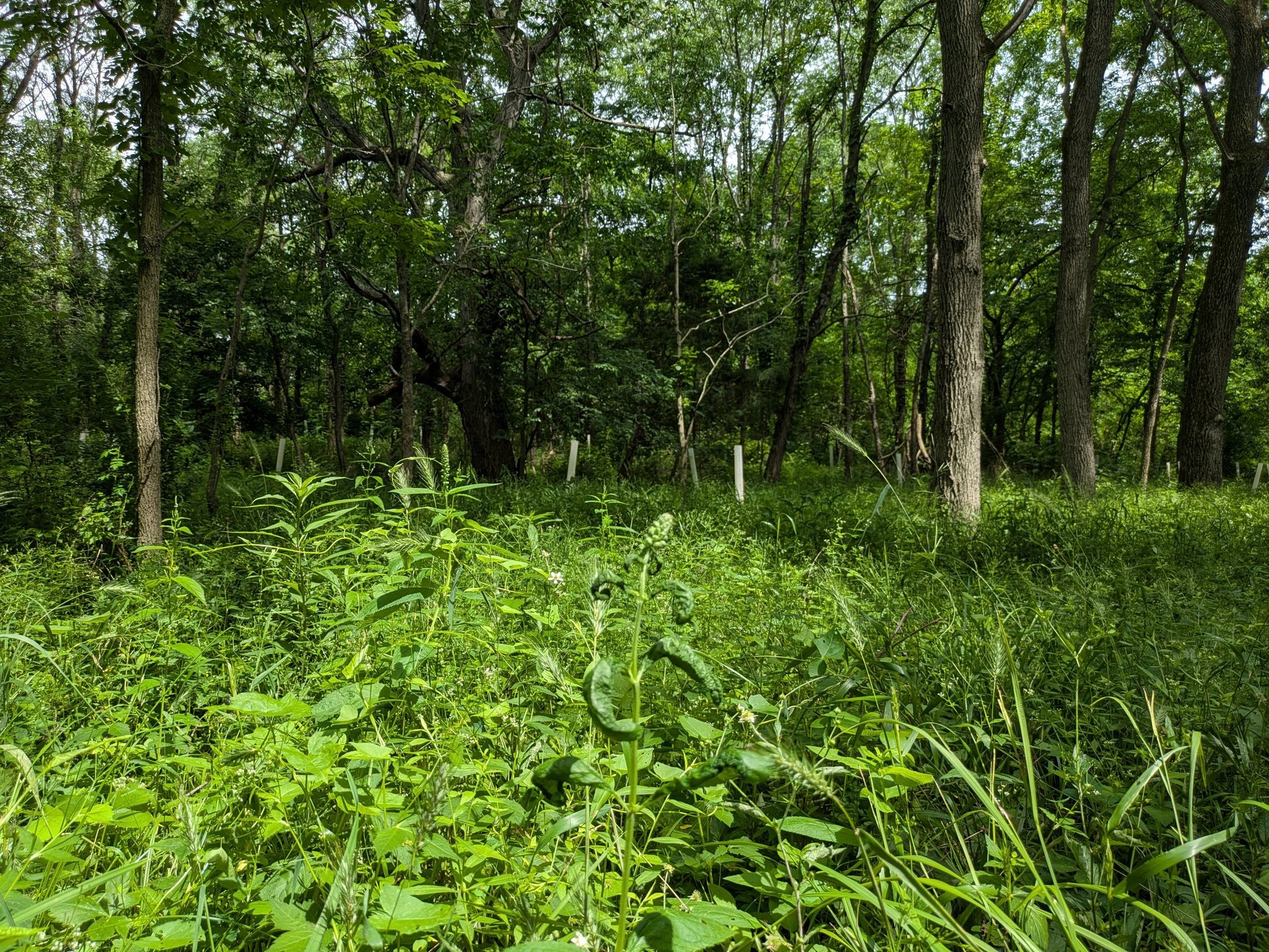
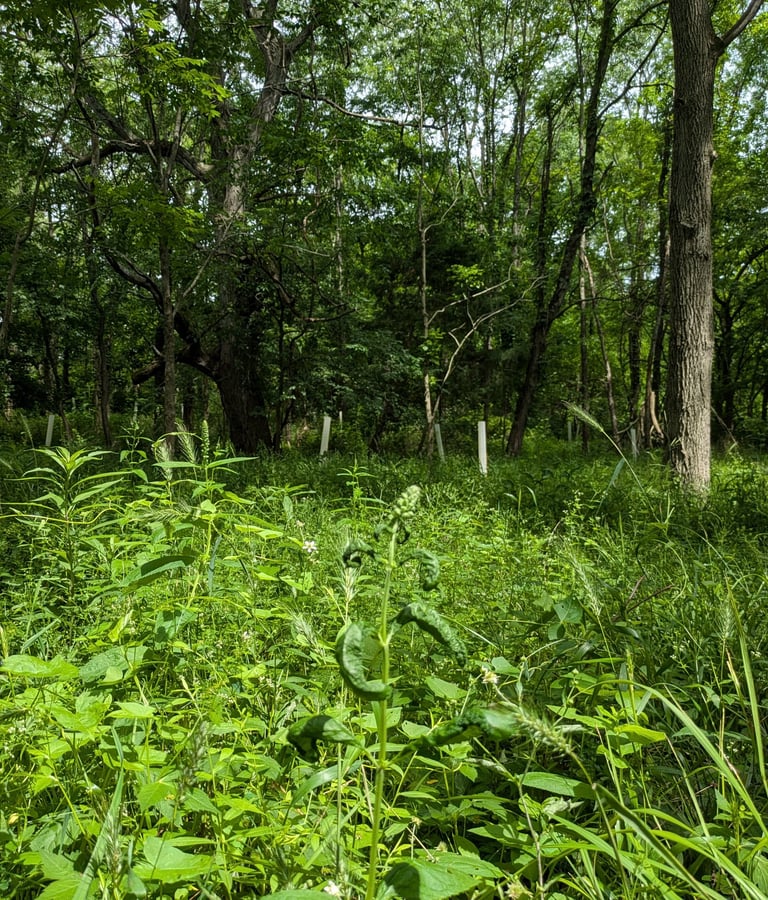
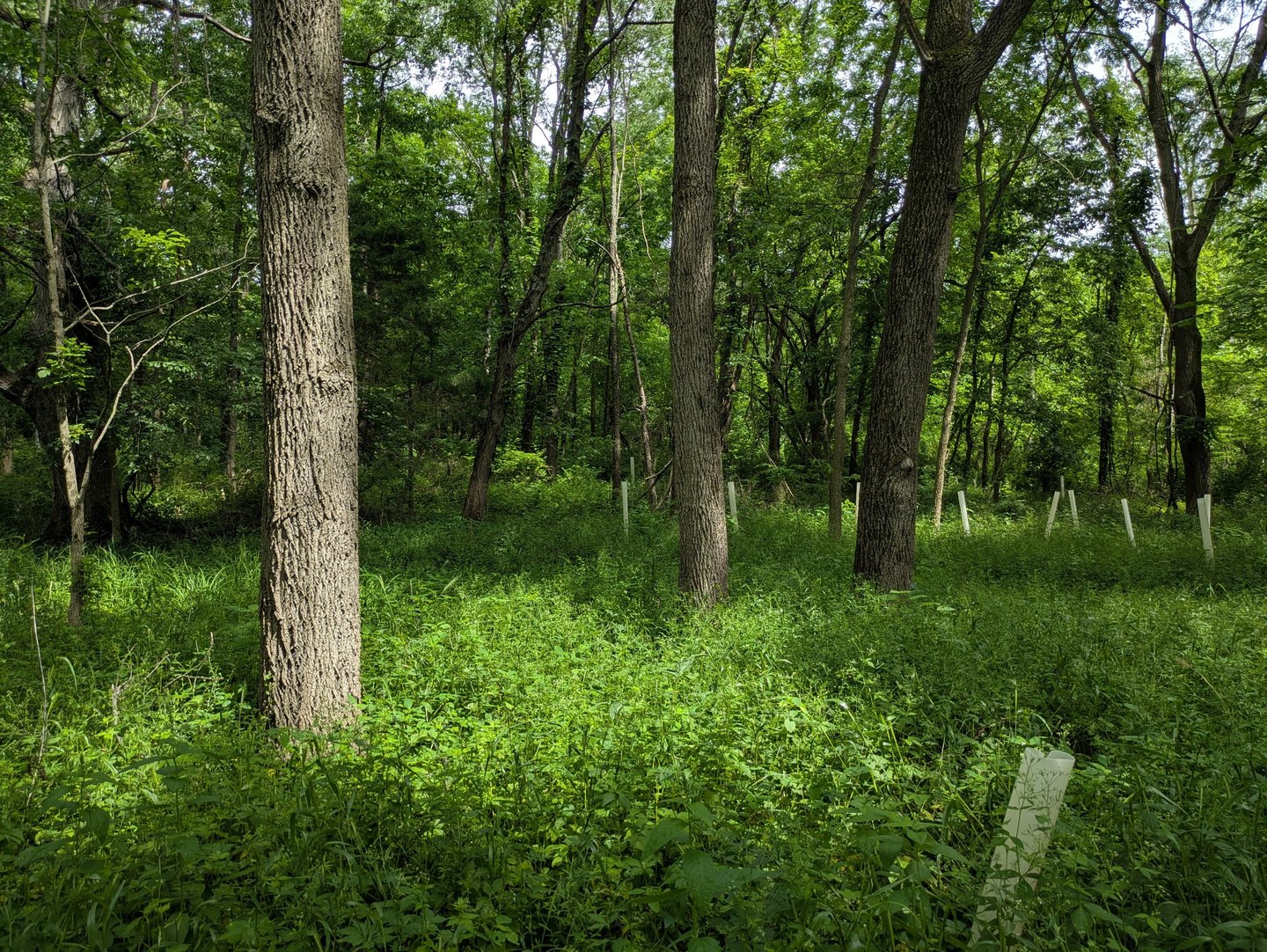
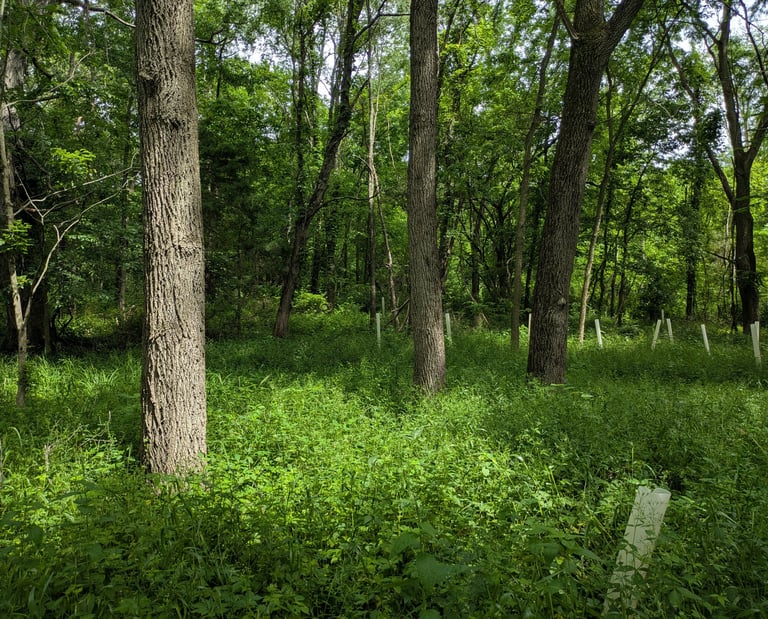
Despite our best efforts to succeed with every one of our over 800 bareroot trees, we knew there would be issues. These 2-3 year old trees have small root systems and sadly, some were just unable to flourish despite our best efforts. Those that don't succeed will be replaced and given a second chance.
We examine the trees regularly to assess how well they are doing in their environment. Deer are very inquisitive animals and investigate the tubes on a regular basis so we consistently standing the defensive barriers back upright. We plan to replant, move, or replace trees in our food forest as needed.
It's Not Over Until It's Over
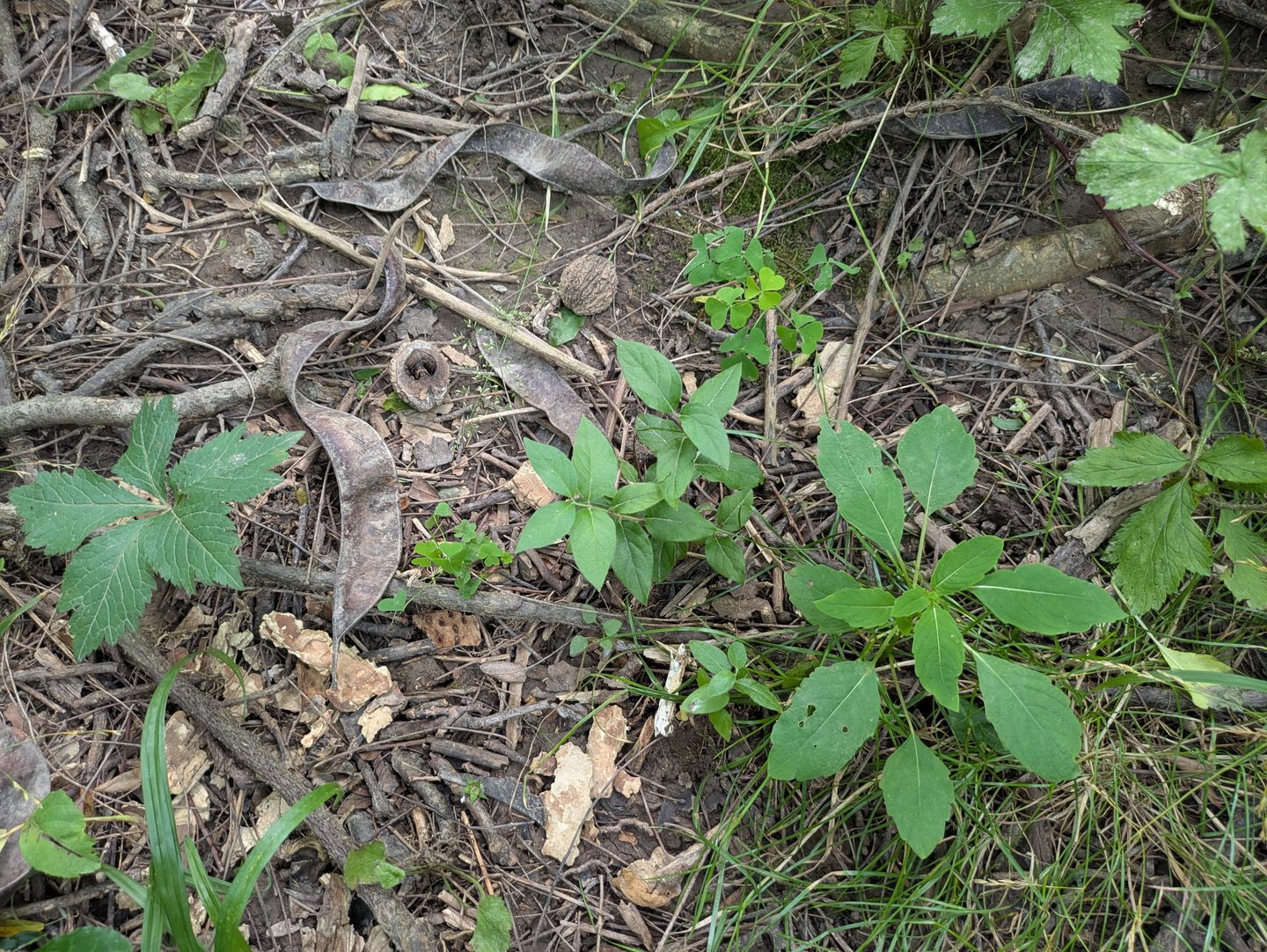
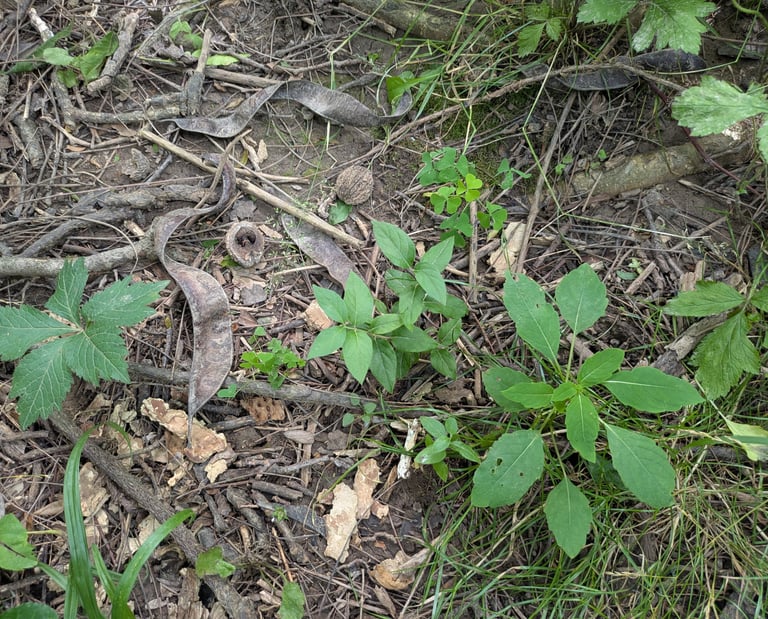
As it turns out, invasive plants are invasive. They do not die easily. They are persistently putting up new sprouts. They drop hundreds of seeds that flourish in every soil type. They resilient to nearly every control method. They just aren't easy to remove!
Killing invasives takes years of effort and multiple passes through the woodland. Just as the soil holds a seed bank for native plants, the invasive seeds are lying in wait ready to sprout each year. We hope that as the native flora increase in size they will help suppress the honeysuckle. Still, our charge is to tirelessly scour our wooded acreage and hunt these massive shrubs until only small ones remain. Then we will pull the small ones until only seedlings appear. Finally we will stomp out all the seedlings. Then we will probably find some we missed.